How often dogs get dental cleaning depends on the dog, but for most, once a year is the answer. Some need a professional dental cleaning every six months, while a few can go longer.
That range is wider than most people expect, which can be frustrating. The right schedule for your dog comes down to a handful of things your veterinarian can see during a straightforward exam. By the end of this page, you will have a much clearer sense of where your own dog falls and what to watch for in between visits.
The short answer: once a year for most dogs
For the average adult dog, an annual professional dental cleaning is a solid starting point. That yearly rhythm gives us a chance to remove the plaque and tartar that have built up over the past twelve months, look below the gumline where problems hide, and catch small issues while they are still small.
But “once a year” is a starting point, not a rule. One dog can reach twelve months with healthy pink gums and barely any buildup, while another is already inflamed. That is why we look at your dog rather than a calendar.
How often dogs need dental cleaning, by size and breed
Size and breed give us the most useful first clue. Here is a general guide:
| Your dog | Typical cleaning schedule |
|---|---|
| Small and toy breeds | Every 6–12 months |
| Flat-faced breeds (Pugs, French Bulldogs, Boston Terriers) | Every 6–12 months |
| Medium breeds | About once a year |
| Large breeds | Every 12–24 months |
| Dogs with a history of dental disease | Every 6 months |
| Senior dogs (age 7+) | Yearly, sometimes more often |
Every dog has 42 adult teeth, whether they are a Great Dane or a Yorkie. In a small mouth, those teeth end up crowded together, and crowding traps food and bacteria in places a tongue or a chew toy will never reach. Flat-faced breeds have the same problem, often with the added complication of teeth that sit at odd angles.
Larger dogs generally have more room to work with, so they tend to build tartar more slowly. That does not make them exempt. It means the interval between cleanings can often be stretched, as long as their yearly exam supports it.
What actually decides your dog’s timeline
The table above is a useful shortcut. What follows is what really sets the schedule.
How fast your dog builds tartar
Plaque is soft and can be brushed away. Left alone, it hardens into tartar in as little as 48 hours, and once that happens, no amount of brushing will shift it. Only professional scaling will. Some dogs cross that threshold faster than others, which is why two dogs on identical routines can need cleanings on different schedules.
What you do at home
Dogs whose teeth are brushed regularly build tartar more slowly, and many go longer between cleanings as a result. If home care has been patchy, that usually shows up in the mouth.
Their diet
Dogs eating mostly soft or wet food tend to accumulate plaque faster than dogs on dry food or a veterinary dental diet.
What we find at the exam
Tartar level, gum health, any bleeding, any early recession, plus what shows up on dental X-rays. These findings tell us more than any chart ever could. If your dog’s gums look great and there is barely any buildup, we will tell you to wait. If we find inflammation starting under the gumline, we’ll tell you that too.
When should your dog have their first dental cleaning?
The American Animal Hospital Association recommends a first professional cleaning by age one for small and medium dogs, and by age two for large dogs.
That often surprises pet parents. A two-year-old dog seems too young to need dental work. But by age three, roughly 80% of dogs already show some degree of periodontal disease, and a lot of that starts quietly in the first couple of years. Getting that first cleaning done on time is one of the easiest ways to keep your dog out of trouble later.
Signs your dog needs a cleaning sooner
Do not wait for the annual visit if you notice any of these:
- Bad breath that goes beyond ordinary “dog breath”
- Yellow or brown buildup, especially along the gumline
- Red, swollen, or bleeding gums
- Chewing on one side, eating slowly, or dropping food
- Pawing at the mouth or rubbing their face on the carpet
- Loose, broken, or discolored teeth
- Drooling more than usual
- Swelling on the face, particularly below the eye
Dogs are remarkably good at hiding oral pain. Many will keep eating happily with a mouth that is genuinely sore. If something looks off, book a dental exam rather than waiting it out.
Why dental cleanings are done under anesthesia
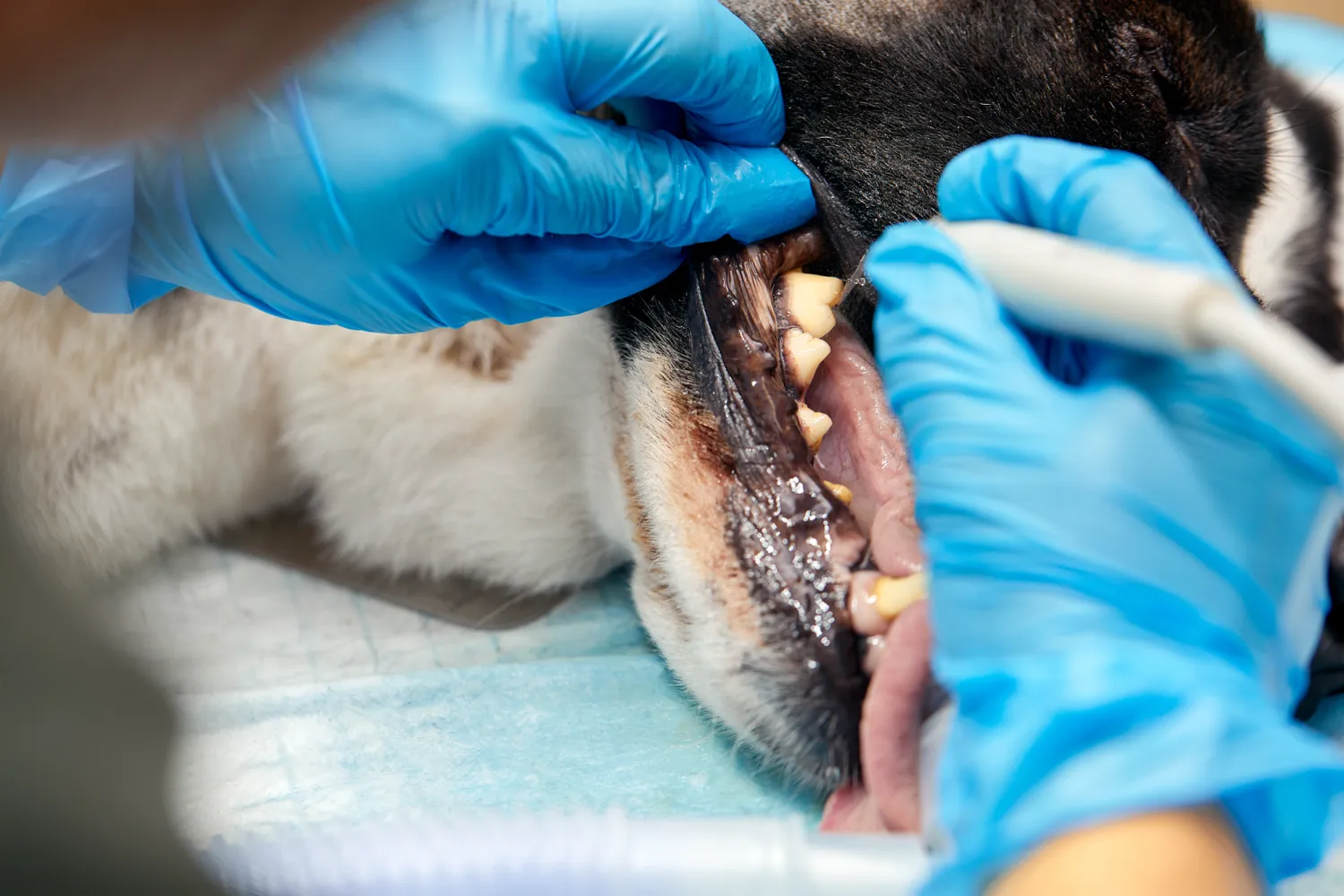
Most dental disease in dogs starts below the gumline, in the space between the tooth and the gum. You cannot see it. We cannot reach it on a wriggling, awake dog. Dental X-rays, which show us tooth roots and bone loss that are invisible on the surface, also require a patient to hold completely still.
Anesthesia lets us do the job properly: scale above and below the gumline, take X-rays, examine every tooth, and polish afterward to slow the next round of buildup. Before your dog goes under, we run pre-anesthetic bloodwork, and we monitor them closely from start to finish. Most dogs go home the same day, a bit sleepy and otherwise themselves.
You may have seen anesthesia-free cleanings advertised. They scrape visible tartar off the surface of the tooth, which looks tidy but leaves the disease-causing bacteria below the gumline completely untouched. The American Veterinary Dental College does not recommend them, and neither do we.
Are you nervous about the anesthesia itself? See whether dental cleaning is safe for dogs and how we manage the risk.
What you can do between professional cleanings
Home care will not replace a cleaning, but it will slow things down and can lengthen the gap between appointments.
- Brushing is the single most effective thing you can do. Use a dog-safe toothpaste, never a human one. Start slow, keep sessions short, and finish with something good.
- Dental chews approved by the Veterinary Oral Health Council are a useful supplement between brushings.
- Dental diets are formulated to reduce tartar as your dog chews.
- Water additives are an easy win for dogs who will not tolerate a toothbrush.
None of it reaches the places where dental disease actually starts. That is what professional cleaning is for.
Waiting usually costs more, not less
We understand the instinct to hold off. A dental cleaning is a real expense, and if your dog seems fine, it is tempting to push it another year.
But dogs who arrive for their first cleaning at seven or eight often have mouths far enough gone that several teeth cannot be saved. What would have been a routine cleaning becomes multiple surgical extractions, a longer anesthetic, and a much bigger bill. Meanwhile, the dog has likely been in quiet pain for a long time.
Staying on schedule is almost always the cheaper path, and it is certainly the kinder one.
For the wider case, read more about why professional dental cleanings matter.
Frequently asked questions
How often should dogs get dental cleaning?
Most dogs need a professional dental cleaning once a year. Small breeds, flat-faced breeds, and dogs with a history of dental disease often need one every six months, while some large dogs with good home care can go twelve to twenty-four months between cleanings. Your veterinarian will set the right interval based on what they find during an exam.
Can I skip a dental cleaning if my dog’s teeth look clean?
Not reliably. Most dental disease starts below the gumline, where you cannot see it. A dog can have clean-looking teeth and still have inflammation or bone loss developing around the roots. That is why an annual dental exam matters even in years when a cleaning turns out not to be needed.
Is anesthesia safe for my dog’s dental cleaning?
Modern veterinary anesthesia is very safe for healthy dogs. We run pre-anesthetic bloodwork beforehand and monitor your dog throughout the procedure. If your dog is older or has an existing health condition, we will talk that through with you before scheduling anything.
Do senior dogs still need dental cleanings?
Yes, and often more of them. Dental disease risk climbs with age, and untreated infection is harder on an older body than a carefully managed anesthetic. Age alone is not a reason to skip dental care. We will assess your senior dog’s overall health and adjust the plan to suit them.
What if I notice a problem between cleanings?
Book a dental exam rather than waiting for the annual visit. Bad breath, bleeding gums, or a dog who has started chewing on one side are all signs they may need looking at sooner. Same-day and weekend appointments are available across our locations, so you will not usually be waiting long.
Does brushing mean my dog needs fewer cleanings?
Dogs whose teeth are brushed regularly build tartar more slowly and often go longer between professional cleanings. Brushing cannot remove tartar once it has hardened or reach below the gumline, so it lengthens the interval rather than replacing the cleaning.
Not sure where your dog falls? Let’s take a look
The best way to know how often your dog needs a dental cleaning is to have someone look in their mouth. Book a dental exam with your Hometown Veterinary Partners team, and we will walk you through exactly what we see, what it means, and whether your dog needs a cleaning now or can comfortably wait.
This article does not constitute medical advice. Always consult a veterinarian for guidance specific to your pet’s health.