Your vet mentions that your dog needs a dental cleaning, and everything else in the sentence disappears. All you hear is the word anesthesia.
For the overwhelming majority of dogs, dental cleaning is safe when it is done properly, with the right screening beforehand and careful monitoring throughout.
But you deserve to know what “done properly” actually means, so you can decide with confidence rather than just hope for the best.
What a professional dental cleaning involves
A veterinary dental cleaning is closer to a full oral health assessment, with the cleaning as one part of it.
- A pre-procedure exam and bloodwork. Before anything is scheduled, we assess your dog’s overall health and talk through any concerns you have. Bloodwork checks liver and kidney function so we know how your dog is likely to handle the day.
- A tooth-by-tooth examination. Every tooth gets checked individually, and a dental probe measures the pockets between tooth and gum. Deep pockets are one of the earliest signs of trouble, and they’re invisible from the outside.
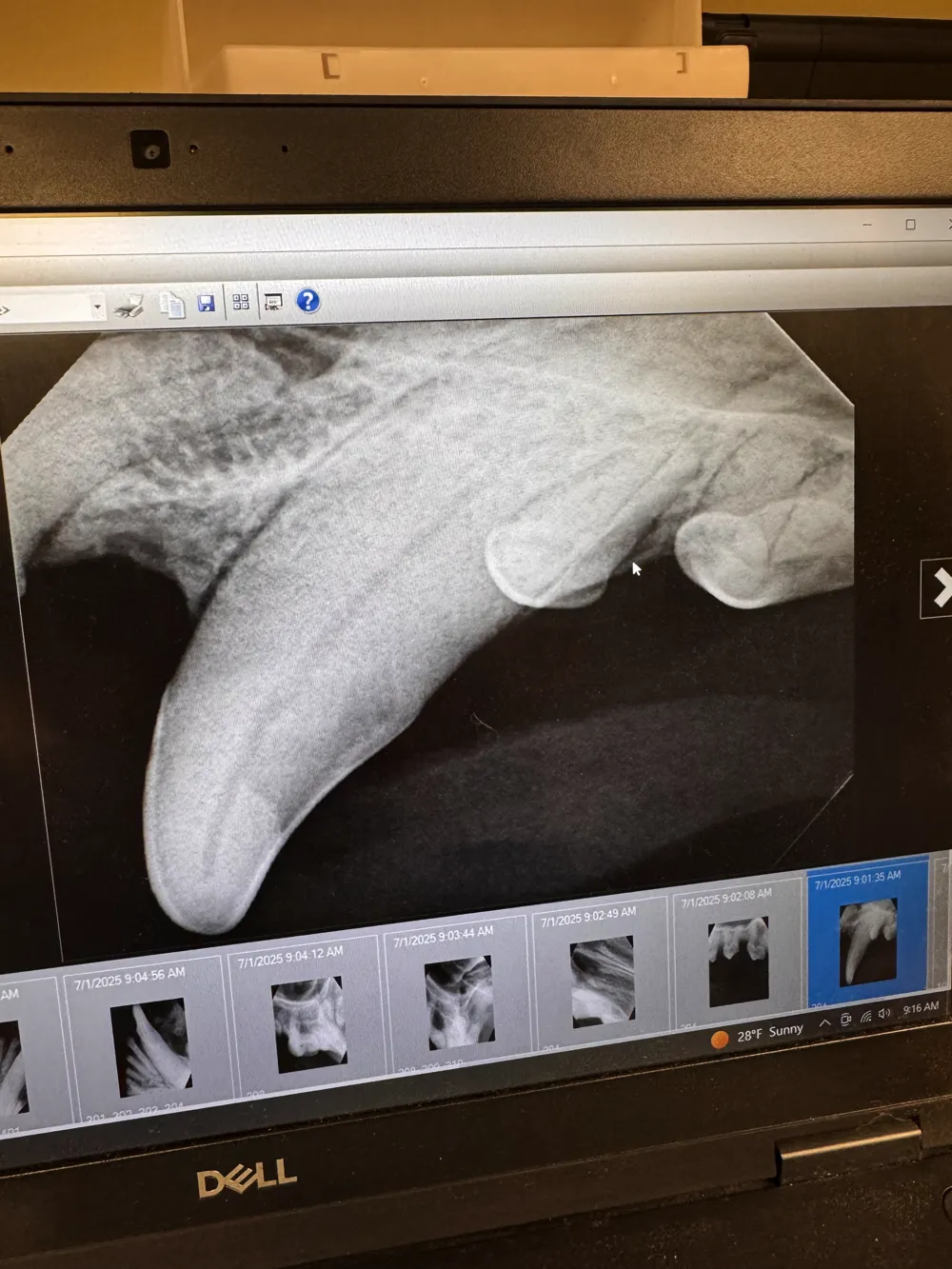
- Dental X-rays. Roughly two-thirds of each tooth sits below the gumline, so a surface exam misses a lot. X-rays show tooth roots, bone loss, and abscesses that can’t be seen any other way.
- Scaling above and below the gumline. Tartar is removed from the visible surfaces and from beneath the gumline where periodontal disease actually begins.
- Polishing. Scaling leaves microscopic scratches in the enamel, and plaque sticks to a rough surface more easily than a smooth one. Polishing stops the cleaning from causing its own problem down the line.
- Extractions, only if needed and only with your say-so. If a tooth is damaged or infected beyond saving, removal is often the kindest option. If that comes up while your dog is under, your vet will call you to discuss what they’ve found and get your approval before going ahead.
- Recovery and home care. Your dog is monitored until they’re fully awake, and you go home with clear aftercare instructions.
Most dental procedures are same-day.
Why your dog needs to be asleep for a dental cleaning
You’d think they could sit still for it. After all, they manage nail trims.
You may have seen anesthesia-free dental cleaning offered at groomers or pet stores. It’s become increasingly popular, and it has a place for some dogs. As a maintenance option between full cleanings, it keeps the visible surfaces of the teeth free of buildup.
But periodontal disease begins in the pockets between tooth and gum, where bacteria settle in long before you notice anything on the surface. Reaching that area on a conscious dog is next to impossible.
There is also the matter of sharp instruments in a moving mouth. A dog who turns their head at the wrong moment can end up with a cut gum. A proper dental assessment involves examining every tooth individually, probing for pockets, and taking dental X-rays to look at the roots and bone underneath. None of that can happen with a wriggling, worried dog who would very much like to leave now, please.
Anesthesia is what makes a thorough cleaning possible in the first place. For that reason, it’s not something we offer at Hometown Vet.
How we keep anesthesia safe
Anesthesia is a reasonable worry for dog owners. Here’s how the risk is managed.
- Screening first. Bloodwork and a physical exam happen before any drug is given. Dogs can look perfectly healthy and still have organ values that change our approach.
- A plan built around your dog. Age, breed, weight, and health history shape the protocol. A ten-year-old Labrador and a two-year-old Pug shouldn’t get the same anesthetic plan.
- Continuous monitoring. Heart rate, blood pressure, oxygen levels, breathing, and body temperature are tracked throughout the procedure.
- Supervised recovery. Your dog stays warm and monitored until they’re fully awake.
Our dog dental cleaning page walks through each stage in more detail.
What happens if you skip it?
We have spent this whole article on the risks of doing the cleaning. So let’s talk about what happens if you don’t.
“He’s eating fine” is the least reliable signal there is. Dogs are extraordinarily good at hiding oral pain. They will chew on a fractured tooth or an infected gum and carry on wagging.
Meanwhile, plaque hardens into tartar within a matter of days. Gingivitis becomes periodontitis. The bacteria involved do not politely stay in the mouth, either, and dental disease has been linked to changes in the heart, liver, and kidneys.
Waiting doesn’t cancel the procedure; it just changes what the procedure has to be. Advanced disease means more extractions, longer under anesthesia, and a harder recovery. The dental you book while things are still manageable is the straightforward one.
Read more about why professional dental cleanings matter more than you think for the bigger health picture.
Frequently asked questions
Is dental cleaning safe for older dogs?
Your dog’s health status matters more than their age, and plenty of senior dogs have dental procedures safely. The preparation changes, with older dogs getting more screening. They are often the ones who need dental care most, because they’ve had years for tartar and infection to build.
How often should my dog have their teeth cleaned?
It depends on your dog. Small breeds tend to have crowded teeth and shallower roots, so they often need cleaning earlier and more often than larger dogs. Your vet will recommend a schedule based on what they find at your dog’s exam.
For more on timing, see our guide on how often dogs need dental cleaning.
Are some breeds higher risk under anesthesia?
Flat-faced breeds like Bulldogs and Pugs have airway anatomy that needs extra attention, and their anesthetic plan is adjusted accordingly.
Will my dog be in pain afterward?
Pain management is part of the plan, particularly if extractions are involved. You’ll go home knowing what to expect and what to watch for.
Can I just brush my dog’s teeth instead?
Brushing is valuable, and it slows plaque buildup between cleanings. What it can’t do is reach below the gumline, which is where periodontal disease starts. The two work together rather than replacing one another.
Have cats too? See how often cats need dental cleaning and brushing for the feline routine.
What if my dog has a health condition?
Existing conditions don’t automatically rule out a dental. Tell your vet everything about your dog’s history – that’s what the pre-procedure assessment is for.
A cleaning should feel like care, not a gamble
You’re not being overcautious by asking whether dental cleaning is safe for dogs. What we would rather you did not do is let that worry make the decision for you, because putting it off just moves the problem somewhere you can’t see it.
If you have questions about your dog’s teeth, or you have been putting off a dental cleaning for a while and want to talk it through before committing to anything, book an appointment with our team. We are happy to answer anything that is on your mind.
This article does not constitute medical advice. Always consult a veterinarian for guidance specific to your pet’s health.