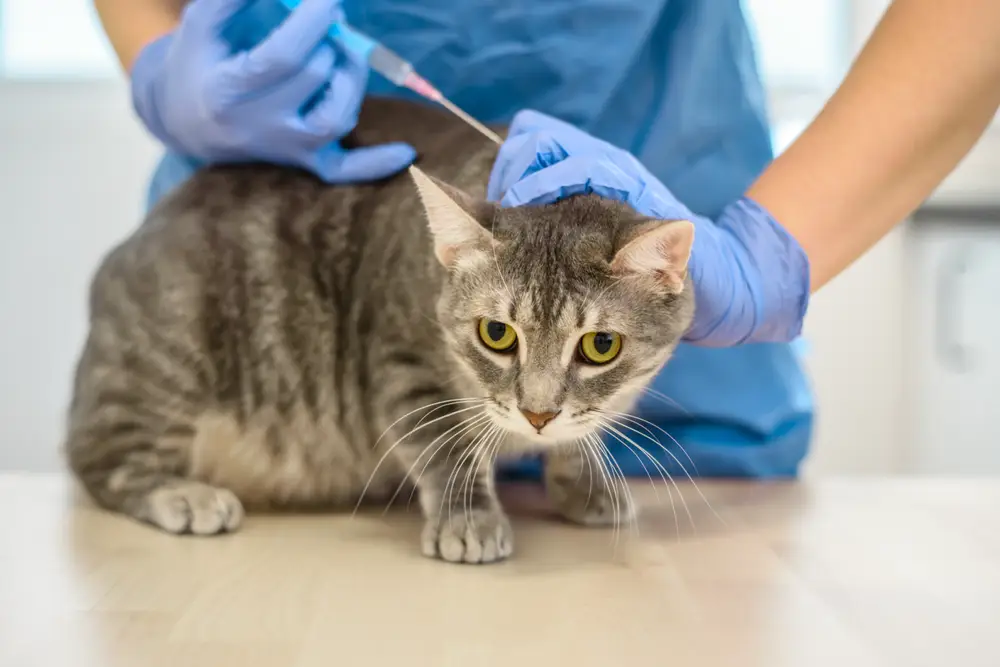
Yes, indoor cats still need core vaccines, including FVRCP and rabies. Even cats that never go outside can encounter infections through people, other animals or wildlife. Some non-core vaccines may not be necessary for a low-risk indoor cat, so your veterinarian can tailor the plan to your cat’s lifestyle.
It’s understandable to wonder whether vaccines are still necessary when your cat spends all day inside. The risk of exposure is generally lower for indoor cats, but it isn’t zero.
Here’s how an indoor cat can be exposed, which vaccines they still need and why regular checkups matter.
How can an indoor cat be exposed to disease?
An indoor lifestyle reduces your cat’s exposure to other animals, but it doesn’t create a completely closed environment. Infectious diseases can reach an indoor cat in several ways.
Some examples include:
- Shoes, clothing and hands: Certain viruses can survive in the environment and potentially be carried into the home on objects or people.
- Escapes: Even a cat that normally stays indoors may slip through an open door or window and encounter other animals.
- Wildlife: Bats and other wildlife can occasionally get inside homes. Bats are a known rabies carrier in the US.
- New cats: Bringing a new cat, foster cat or kitten into your home can introduce infections your resident cat hasn’t encountered.
- Boarding and grooming: Time away from home can bring your cat into contact with other animals or shared environments.
- Veterinary visits: A trip to the veterinarian is important for your cat’s health, but it can also mean being in an environment where other animals have been.
None of this means an indoor cat is likely to become sick every time they encounter one of these situations. It simply means that indoor cats have a lower risk of exposure, not no risk at all.
You can also learn more about how rabies spreads and why vaccination is part of protecting your cat.
Which vaccines do indoor cats need?
Indoor cats still need the core vaccines recommended for cats. Other vaccines may depend on your cat’s age, health and potential exposure.
| Vaccine | Do indoor cats need it? | Why |
|---|---|---|
| FVRCP | Yes | Protects against feline panleukopenia, feline herpesvirus and feline calicivirus. |
| Rabies | Yes | Protects against a serious disease that can spread to people. Rabies vaccination is also required for cats in many areas, although local rules vary. |
| FeLV | Core for kittens. For adult cats, it depends on their exposure risk. | Recommendations depend on age and exposure risk. Testing is generally performed before vaccination. |
| Other non-core vaccines | Usually only if there is a specific risk | Your veterinarian may recommend additional vaccines based on your cat’s lifestyle and potential exposure. |
For the full list of what vaccines cats need, including the kitten series and adult booster schedule, see our cat vaccine guide.
Do indoor cats need a rabies shot?
Yes, indoor cats should generally stay up to date with rabies vaccination. In addition to the possibility of an escape or a bat entering the home, rabies vaccination may be required under state or local law.
The exact rabies schedule depends on the vaccine used and the rules where you live. Your veterinarian can confirm which schedule applies to your cat.
For more detail, including how often cats need a rabies vaccine, see our dedicated guide. You can also read more about how rabies can be prevented.
Do indoor cats need the FeLV vaccine?
Whether an indoor cat needs the FeLV vaccine depends on their age and potential exposure risk.
FeLV vaccination is considered core for cats under 1 year old, even if they live indoors, because younger cats are more vulnerable to infection. For adult indoor cats, the recommendation depends on their lifestyle and risk of exposure.
Cats that stay indoors and have no contact with infected cats or cats of unknown FeLV status may not need ongoing FeLV vaccination. Your veterinarian can assess your cat’s individual risk and recommend testing before vaccination.
A cat’s risk can change over time. For example, bringing another cat into the household or allowing your cat to spend time outdoors may change the vaccination plan. Your veterinarian can reassess your cat’s needs whenever their lifestyle changes.
Which vaccines might your indoor cat skip?
Your indoor cat may not need every available non-core vaccine.
For a low-risk adult cat with no outdoor access and limited contact with other animals, your veterinarian may decide that some non-core vaccines are unnecessary. That doesn’t mean you should skip a vaccine on your own. Instead, your veterinarian can look at your cat’s current lifestyle and explain which vaccines are appropriate.
It’s worth mentioning any changes in your cat’s routine, including outdoor access, boarding, grooming, travel or a new cat joining the household.
How often do indoor cats need boosters?
Indoor cats generally follow the same core vaccination schedule as other cats. After the kitten series and first booster, vaccines are given at intervals based on the vaccine used, your cat’s risk and local requirements.
Rabies vaccines may be given every one or three years depending on the product and local law. For the full schedule, see our guide to what vaccines cats need and our detailed guide to the cost of cat rabies boosters.
Why indoor cats still need a yearly checkup
Vaccines are only one part of your cat’s preventive care. Regular veterinary checkups matter even when your cat never goes outside.
Cats can be very good at hiding signs that something is wrong. A routine exam gives your veterinarian an opportunity to look for changes that may not be obvious at home, including changes in:
- Weight and body condition
- Teeth and gums
- Heart and breathing
- Skin and coat
- Appetite and digestion
- Behavior and activity
- Overall health
The visit is also a chance to review your cat’s vaccination history and decide what is actually due. Your cat may not need every vaccine at every visit, but keeping up with regular exams means their preventive care can be adjusted as their needs change.
If you’re concerned that something may be wrong between visits, our guide to signs your cat may be sick can help you know what to look for.
Regular checkups are easier when getting your cat out of the house is less stressful. Our guide to getting your cat to the veterinarian has practical tips for traveling with your cat.
Vaccines and checkups for indoor cats at Hometown Veterinary Partners
Whether your cat is strictly indoors or spends some time outside, your veterinarian can help you determine which vaccines are appropriate and when boosters are due.
Hometown Veterinary Partners provides preventive care for cats, including vaccinations and wellness visits, with same-day and weekend appointments available.
Ready to get your cat’s preventive care up to date? Book Now or
find your nearest Hometown hospital.
Frequently asked questions
Can I stop vaccinating my indoor cat?
No. Indoor cats should still receive their core vaccines, including FVRCP and rabies. Rabies vaccination may also be required by state or local law. Your veterinarian may recommend fewer non-core vaccines if your cat has a low-risk indoor lifestyle, but you shouldn’t stop or change vaccinations without discussing it with your veterinarian.
How can an indoor cat get sick?
An indoor cat can be exposed to infections through contaminated objects brought into the home, contact with new cats, escapes, boarding or grooming and, in some cases, wildlife that enters the house. Bats can carry rabies, which is one reason keeping an indoor cat’s rabies vaccination current is important.
Does my indoor cat need the FeLV vaccine?
Cats under 1 year old should receive it, as it’s considered core at that age. For adult cats, it depends on exposure risk. It depends on your cat’s age and potential exposure risk. If your cat starts going outdoors, lives with a new cat or has another change in their exposure risk, tell your veterinarian. Their vaccination plan may need to be reassessed.
Do indoor cats need a yearly checkup?
Yes. Indoor cats still benefit from regular veterinary exams. Cats can hide signs of illness, so a routine visit gives your veterinarian a chance to check their overall health, review changes in weight or behavior and determine which preventive care and vaccines are due.
Do indoor cats need vaccine boosters?
Yes, indoor cats still need appropriate booster vaccines. The timing depends on the vaccine, your cat’s vaccination history and their individual risk. Core vaccines follow the same general schedule as other cats, while some non-core vaccines may not be necessary for a low-risk indoor cat.