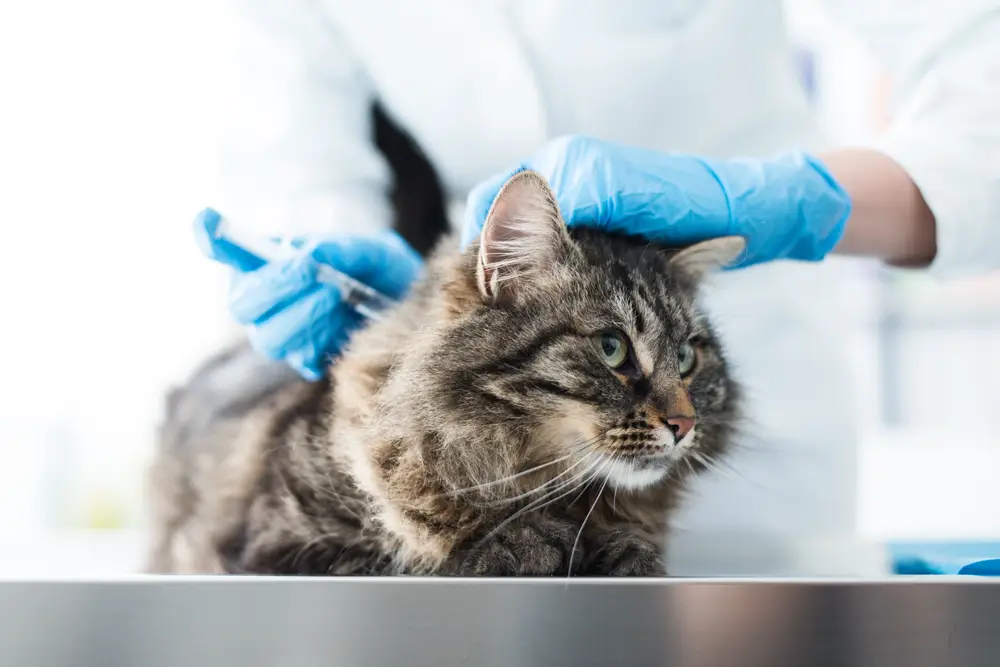
Most cats need core vaccines against feline panleukopenia, feline herpesvirus and feline calicivirus, along with rabies where required. The feline leukemia virus (FeLV) vaccine is also considered core for kittens and cats under 1 year old, while vaccination in older cats depends on their lifestyle and potential exposure. Kittens receive a series of vaccines before moving on to a longer-term booster schedule.
If you have a new kitten, an adopted adult cat or a vaccine reminder sitting on your calendar, it can be difficult to know which shots your cat actually needs.
Here’s a straightforward look at the core and non-core cat vaccines, when they’re usually given and how your veterinarian decides what’s right for your cat.
Core vs non-core cat vaccines at a glance
Cat vaccines are generally divided into core and non-core vaccines.
Core vaccines are recommended for cats because they protect against diseases that can be serious and because exposure can happen even when a cat spends most of its time indoors. Non-core vaccines are considered based on factors such as age, lifestyle and potential exposure.
| Vaccine | Protects against | Core or non-core | Usual adult interval |
|---|---|---|---|
| FVRCP | Feline panleukopenia, feline herpesvirus and feline calicivirus | Core | Booster timing depends on vaccination history and the vaccine used |
| Rabies | Rabies | Core / required in many areas | One or three years, depending on vaccine and local law |
| FeLV | Feline leukemia virus | Core for cats under 1 year; risk-based for older cats | Based on age and ongoing exposure risk |
| Other vaccines | Depends on the vaccine | Non-core | Depends on the vaccine and individual risk |
Your cat’s vaccination plan may not look exactly like another cat’s. Your veterinarian will consider your cat’s age, health, previous vaccination history and lifestyle when deciding which vaccines are appropriate.
For more information about what cat vaccines cost, see our guide to
pet vaccination costs.
Core vaccines every cat needs
FVRCP vaccine
The FVRCP vaccine protects against three common and potentially serious feline diseases:
- Feline viral rhinotracheitis: Usually caused by feline herpesvirus, this can cause respiratory signs such as sneezing, nasal discharge and eye problems.
- Calicivirus: This virus can cause respiratory illness and mouth ulcers, with severity varying between cats.
- Panleukopenia: Sometimes called feline distemper, this highly contagious viral disease can cause severe illness, particularly in kittens.
FVRCP is given as part of the kitten vaccination series and then continued with booster doses according to your veterinarian’s recommended schedule.
Rabies vaccine
Rabies is a serious disease that can affect cats and people. Rabies vaccination is required for cats in many states and local areas, although the exact rules vary.
The vaccine schedule also depends on the product used. Some rabies vaccines are licensed for one year and others for three years, so your veterinarian can tell you which schedule applies to your cat.
If you want more detail, including how often cats need a rabies vaccine, see our guide to cat rabies boosters.
You can also learn more about rabies prevention.
FeLV vaccine: core for kittens, risk-based for older cats
Some vaccination recommendations depend on both your cat’s age and their risk of exposure. FeLV vaccination is considered core for kittens and cats under 1 year old. For older cats, your veterinarian will consider their lifestyle and potential exposure before deciding whether ongoing FeLV vaccination is appropriate.
FeLV vaccine
The FeLV vaccine protects against feline leukemia virus, an infection that can cause serious health problems in cats.
FeLV vaccination is considered core for kittens and cats under 1 year old because younger cats are particularly susceptible to infection. For adult cats, the recommendation is based more closely on exposure risk, such as whether they spend time outdoors or may come into contact with cats whose FeLV status is unknown.
Cats are generally tested for FeLV before vaccination so your veterinarian can determine the appropriate next step.
Non-core vaccines your cat may need
Other non-core vaccines
Some cats may be candidates for additional vaccines depending on their lifestyle and exposure risk.
For example, a cat that regularly boards, lives with other cats or has other potential exposure risks may have different vaccination needs from a strictly indoor cat.
Kitten vaccines: a quick summary
Kittens need a series of vaccinations because the protection they receive from their mother gradually decreases, while their own immune system is still developing.
The exact timing of the series depends on the vaccines being used and your veterinarian’s protocol. In general, kittens receive their initial vaccinations in a series of doses spaced apart over the first few months of life.
Kittens are not considered fully vaccinated until their initial vaccination series has been completed, so your veterinarian will let you know when it is safe to consider the series finished.
There is also an important step after the kitten series: the first booster.
After that, your cat moves on to a longer-term vaccination schedule based on the vaccine, their lifestyle and other risk factors.
If you’re also planning your kitten’s first-year care, see our guide to when to spay or neuter a kitten.
How often do adult cats need vaccines?
Adult cats don’t necessarily need every vaccine every year. Different vaccines provide protection for different lengths of time, and your veterinarian will recommend boosters based on the vaccine used and your cat’s individual risk.
For many adult cats, the pattern looks something like this:
- FVRCP: Booster timing depends on your cat’s vaccination history and the vaccine used.
- Rabies: Every one or three years, depending on the vaccine and local requirements.
- FeLV: Ongoing vaccination is based on your cat’s age and risk of exposure.
- Other vaccines: Your veterinarian may recommend additional vaccines and booster timing based on your cat’s lifestyle and potential exposure.
Your cat’s yearly veterinary visit is still important even when a particular vaccine isn’t due. An annual exam gives your veterinarian a chance to review your cat’s health, vaccination history and lifestyle and decide what preventive care is appropriate.
If your cat has missed a booster, don’t assume you need to start over. Book an appointment and bring any vaccination records you have. Depending on how long it has been and which vaccine is involved, your veterinarian may recommend a booster or restarting part of a series.
For rabies vaccines specifically, the rules can be different depending on local requirements, so see our guide to how often cats need a rabies vaccine for more information.
Does your cat’s lifestyle change what they need?
Yes. Your cat’s lifestyle can affect which non-core vaccines your veterinarian recommends.
An indoor-only cat can still be exposed to infectious diseases, so indoor living does not automatically mean skipping core vaccines. However, some additional vaccines may be less relevant if your cat has very limited contact with other animals.
Your veterinarian may also consider factors such as:
- Whether your cat goes outdoors
- Whether they live with other cats
- Whether a new cat is joining the household
- Boarding or other situations involving contact with unfamiliar cats
- Travel or other changes to their routine
For a closer look at the question “do indoor cats need vaccines?”, see our dedicated guide.
Vaccine side effects and injection-site lumps
Most cats tolerate vaccines well. Some may be a little tired, sore or less interested in food for a short time after vaccination.
More serious reactions are uncommon, but some symptoms need immediate attention. If your cat develops difficulty breathing, collapses or shows other signs of a severe reaction after vaccination, seek emergency veterinary care right away.
Contact your veterinarian promptly if your cat develops other concerning symptoms, such as facial swelling or repeated vomiting, so they can advise you on the appropriate next step.
You may also notice a small lump where your cat received an injection. A small lump can occur after vaccination and will often go away on its own. Let your veterinarian know if a lump persists, gets larger or otherwise concerns you.
For non-life-threatening symptoms that need prompt attention, see our guide to when to take your pet to urgent care.
Keep your cat’s vaccines up to date with Hometown Veterinary Partners
Keeping track of vaccines can feel complicated, particularly during your kitten’s first year. Your veterinarian can help you determine which vaccines your cat needs, when boosters are due and whether their lifestyle has changed enough to affect the plan.
Hometown Veterinary Partners provides preventive care for cats, including vaccinations and wellness visits, with same-day and weekend appointments available.
Ready to get your cat’s vaccines up to date? Book Now or
find your nearest Hometown hospital.
Frequently asked questions
What shots do kittens need?
Kittens need their core vaccines, including FVRCP, rabies where required and FeLV. These vaccines are given as a series while your kitten is young, followed by boosters as appropriate. Your veterinarian will set the exact schedule based on the vaccines used, your kitten’s age and health, and local requirements.
Is the FeLV vaccine necessary?
FeLV vaccination is considered core for cats under 1 year old. For older cats, whether ongoing vaccination is recommended depends on their risk of exposure to feline leukemia virus. Cats that go outdoors or may come into contact with cats whose FeLV status is unknown may be at greater risk. Your veterinarian can assess your cat’s lifestyle and recommend the appropriate vaccination plan.
Do older cats still need vaccines?
Yes, most older cats still need appropriate vaccinations. Their schedule may be adjusted based on their health, lifestyle, previous vaccination history and the vaccines they have already received. Your veterinarian can review what is due during your cat’s regular wellness visit and decide whether any changes are appropriate.
What if my cat missed a booster?
Book a veterinary appointment as soon as you can and bring your cat’s vaccination records if you have them. Depending on how long the vaccine has been overdue and which vaccine is involved, your veterinarian may recommend a booster or restarting part of the series. Rabies requirements can also vary by local law.
Do indoor cats need all these vaccines?
Indoor cats still need core vaccines because being indoors does not completely eliminate exposure to infectious diseases. Some non-core vaccines may not be necessary for a cat with very limited exposure to other animals. Your veterinarian can recommend a vaccination plan based on your cat’s lifestyle.