Cats are great at hiding discomfort, which means skin infections can go unnoticed until they become more advanced. What may start as mild irritation can quickly turn into something more serious if left untreated.
Understanding what to look for and how to respond early can help your cat heal faster and stay comfortable.
What a skin infection can look like
Skin infections in cats do not always look the same. Some are obvious, while others are easy to miss at first.
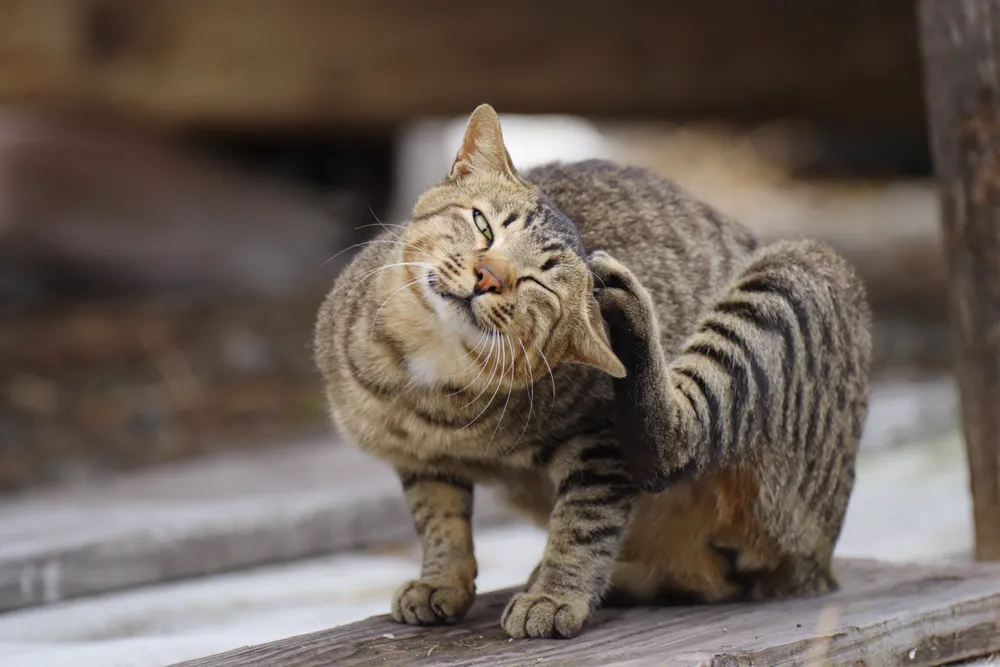
You might notice things like redness, patchy hair loss, or areas where your cat is grooming excessively. In other cases, the skin may look scaly, crusty, or even slightly moist.
Common signs include:
- Increased scratching or licking
- Bald spots or thinning fur
- Red or inflamed skin
- Scabs or crusty patches
- Unusual odor
- Small bumps or sores
If the condition seems to be spreading or getting worse, it is likely more than simple irritation.
Why cat skin infections happen
Skin infections are usually not the primary issue. They tend to develop when something else disrupts the skin’s natural barrier.
For example, allergies can cause itching, which leads to broken skin. This ongoing irritation is different from a sudden allergic reaction in cats, which may cause facial swelling, hives or breathing problems and needs prompt veterinary advice.
Other contributing factors can include parasites, poor grooming, excess moisture, or underlying health conditions.
In many cases, treating the infection alone is not enough. The root cause also needs to be addressed to prevent it from coming back.
What you can try at home
If the symptoms are mild and your cat is otherwise acting normal, you can start with a few basic steps.
Think of this as supportive care rather than a full solution:
- Keep the area clean and dry
- Gently wipe with a vet-approved cleanser
- Prevent excessive licking if possible
- Wash bedding and clean common resting areas
Avoid using human creams or medications, as these can make things worse or be unsafe for cats.
Some mild cases may improve with these steps, but ongoing symptoms usually need more targeted care.
When it is time to get help
There is a clear point where home care is no longer enough. If you notice any of the following, it is time to involve your vet:
- The infection is spreading
- Your cat seems uncomfortable or in pain
- There is discharge or an open wound. If the discharge is coming from the eye rather than the skin, see our guide to the signs of a cat eye infection.
- The area has a strong odor
- No improvement after a few days
Cats often hide discomfort, so even small signs can be significant.
How treatment typically works
Once your vet examines your cat, treatment will depend on the type of infection and how advanced it is.
This might include medicated shampoos, topical treatments, or oral medications. In some cases, testing is needed to determine whether the infection is bacterial, fungal, or related to another condition.
Treatment plans are often layered, meaning they address both the infection and the underlying cause.
A different way to think about it
Instead of asking “how do I treat this,” it can help to think:
What caused this in the first place?
Skin infections are often a symptom, not the root problem. Addressing the underlying issue is what leads to long term improvement.
Helping prevent future flare ups
Once your cat’s skin has healed, prevention becomes much easier than treatment. Staying consistent with a few key habits can help reduce the chances of infections coming back.
Focus on:
- Regular grooming to remove dirt, debris, and loose hair
- Keeping your cat’s bedding and favorite spots clean
- Staying up to date on flea and parasite prevention
- Checking your cat’s skin regularly for early signs of irritation
- Managing moisture, especially around the paws and skin folds, and watching for signs of a cat ear infection, such as redness, odor or discharge
- Feeding a balanced diet that supports skin and coat health
If allergies are involved, working with your vet on a long term plan can make a big difference. Managing the underlying cause is one of the most effective ways to prevent repeat infections.
Do not wait it out
Skin infections can worsen quickly and become more uncomfortable over time. What starts as a small patch can spread or deepen if not treated properly.
If something looks off or is not improving, it is worth getting it checked, especially if you are unsure whether your cat needs urgent care or emergency care.
Our team is here to help you figure out what is going on and get your cat back to feeling comfortable. With same-day appointments available at all our clinics, and walk-ins offered at select locations, it’s easier to start treatment early and avoid unnecessary discomfort.
Schedule a visit or call today to get started.