
Bringing home a new pet is exciting, but there is one important detail many owners overlook: updating the microchip registration.
If your dog or cat already has a microchip, the information connected to that chip may still belong to the breeder, rescue organization, shelter, or previous owner. Unless the registration is updated, a veterinary clinic or shelter may contact the wrong person if your pet is ever lost.
Fortunately, transferring microchip ownership is usually a straightforward process.
Start by confirming your pet has a microchip
Before you can update ownership information, you need to know whether a microchip is present and which company manages the registration.
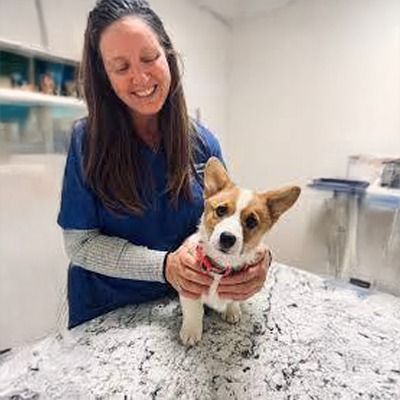
A veterinary clinic can quickly scan your pet and retrieve the microchip number.
Once you have the number, you can:
- Identify the microchip registry
- Verify the current registration status
- Begin the ownership transfer process
If you are unsure whether your pet has a microchip, your veterinarian can help. See why pet microchips are essential for how accurate registration speeds up reunions.
Why transferring ownership matters
A microchip is only useful if the contact information attached to it is accurate.
Imagine your pet gets lost and is brought to a shelter. Staff scan the chip and call the number on file, only to discover it belongs to a previous owner who moved years ago.
Even though the microchip worked perfectly, outdated information could delay or prevent reunification.
Updating ownership helps ensure:
- You can be contacted if your pet is found
- Emergency contacts are current
- Your address is accurate
- Registration records reflect the correct owner
The transfer process varies by company
Not all microchip registries operate the same way.
Some allow ownership transfers online in just a few minutes, while others may require documentation or verification before changes can be made.
In many cases, you will need:
- The microchip number
- Your contact information
- Proof of adoption or ownership
- Registration fees, if applicable
The specific requirements depend on the registry managing the chip.
Common situations where ownership should be updated
Ownership transfers are not only for adopted pets.
You may need to update registration information if:
- You adopted from a shelter or rescue
- You purchased a puppy or kitten from a breeder
- A family member gave you a pet
- You inherited a pet
- You recently moved
- Your phone number changed
Any major change involving ownership or contact information should be reflected in the registration.
What if the previous owner cannot be reached?
This situation comes up more often than many people realize.
If you adopted a pet years ago or have limited information about the previous owner, do not assume the transfer is impossible.
Many microchip companies have procedures for resolving ownership questions and updating records when sufficient proof of ownership is provided.
Your veterinarian may also be able to help guide you through the process.
Do not forget to update your information later
Ownership transfer is not a one-time task.
Any time your contact information changes, be sure to update the registration database.
This includes:
- New phone numbers
- New addresses
- New email addresses
- New emergency contacts
The microchip itself may last your pet’s entire life, but the registration information should be reviewed periodically.
If you are wondering how long microchips last, read our guide on do pet microchips expire?
How to check that everything is correct
After completing the transfer, it is a good idea to verify that the registration was processed successfully.
You can:
- Contact the registry directly
- Log into your online account
- Ask your veterinarian to scan the chip again
- Confirm the information on file is accurate
Taking a few extra minutes now can save a lot of stress later.
A small update that makes a big difference
Microchips are one of the best tools for reuniting lost pets with their families, but they only work when the information attached to them is current.
Our team can help scan your pet’s microchip, identify the registry, and answer questions about updating ownership information.
Schedule an appointment today to make sure your pet’s microchip is working for you.