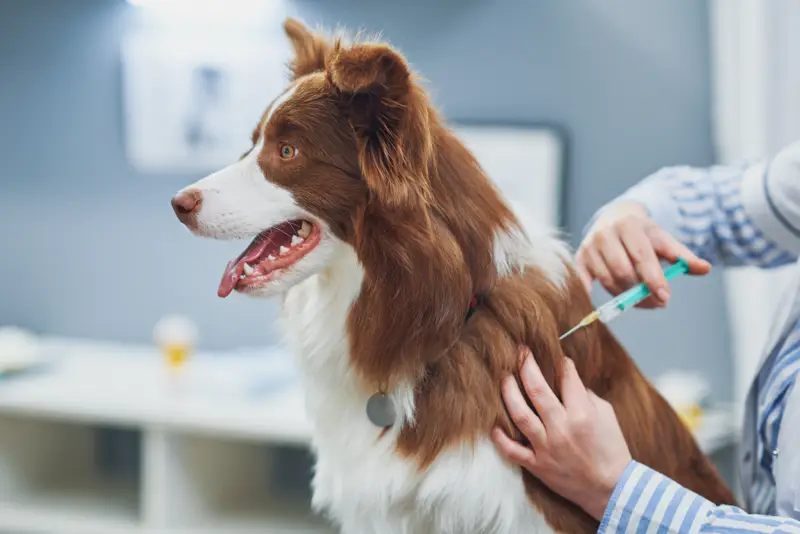
Leptospirosis is a bacterial infection dogs can catch from puddles, ponds, and damp soil, and it can be dangerous for pets and people alike. The leptospirosis vaccine for dogs is a routine immunization and one of the most effective ways to protect against it.
This article covers what the vaccine protects against, which dogs need it, how the schedule works, and whether it is safe.
What is leptospirosis?
Leptospirosis is a bacterial infection caused by Leptospira bacteria, which live in soil and standing water in many parts of the country. It affects dogs most commonly, though it can infect a wide range of mammals, including people.
The bacteria thrive in warm, wet conditions and can survive for weeks in the right environment, which is why cases often rise in late summer and fall and after heavy rainfall.
When a dog becomes infected, the illness can range from very mild to serious. In more severe cases, it can affect the kidneys and liver.
How do dogs catch leptospirosis?
Dogs usually pick up the bacteria from the environment rather than from direct contact with a sick animal. Common sources include:
- Urine from infected wildlife such as rats, raccoons, skunks, and deer
- Puddles, ponds, lakes, and slow-moving water that wildlife have contaminated
- Damp soil where the bacteria linger
- Bacteria entering through a small cut or scrape, or through the mouth, nose, and eyes
Because the bacteria travel through shared water and soil, even a short sniff or a quick drink from the wrong puddle can be enough. Dogs in the Midwest and in urban areas with rat populations face a particularly steady level of exposure, so discuss where you live with your veterinary team.
What are the signs and symptoms of leptospirosis?
Leptospirosis can be tricky to spot, because its early signs look a lot like many other common illnesses. Some dogs show only mild signs, and a few show none at all. Symptoms usually appear within one to two weeks of exposure and may include:
- Fever, shivering, or a general sense that your dog is “off”
- Low energy and loss of appetite
- Vomiting or diarrhea
- Drinking and urinating more than usual, or urinating much less
- Muscle soreness, stiffness, or reluctance to move
- Red or irritated eyes
- Yellowing of the gums, eyes, or skin (jaundice)
The last few signs can mean the infection is starting to affect the kidneys or liver, so it is important not to wait and see. If your dog seems unwell after time near standing water, wildlife, or damp ground, contact your veterinary team promptly. Early diagnosis and treatment give dogs the best chance of a full recovery, and our same-day appointments make it easier to get your dog seen quickly.
What does the leptospirosis vaccine do?
The leptospirosis vaccine trains your dog’s immune system to recognize and fight the most common types of Leptospira before they can take hold.
Modern vaccines protect against four widespread strains, which together account for most of the cases dogs encounter:
- Canicola
- Icterohaemorrhagiae
- Pomona
- Grippotyphosa
The vaccine does not offer a total guarantee against every strain, but it substantially lowers the risk of infection and reduces the severity of illness if a vaccinated dog is exposed.
Leptospirosis can also spread from animals to people, so protecting your dog also helps protect the humans in your household.
Is the leptospirosis vaccine a core vaccine?
For years, leptospirosis was treated as an optional, lifestyle vaccine, but that has changed. In 2024, updated national veterinary guidance began recommending the leptospirosis vaccine for most dogs, reflecting how widespread the disease has become across both rural and city environments.
This means it is no longer just for farm dogs or hikers. Most dogs that spend any time outdoors are now considered good candidates.
Which dogs should get the vaccine?
Nearly any dog with access to the outdoors can benefit. That includes dogs who walk in parks, swim, hike, or share a backyard with local wildlife. It also includes city dogs, since rats are a common source of the bacteria in urban areas.
The idea that only large, rural, or outdoor working dogs are at risk is outdated. Your veterinarian will look at your dog’s age, health, and daily routine and recommend a plan that fits their individual needs.
How the leptospirosis vaccine schedule works
For dogs receiving the vaccine for the first time, protection is built in a short series:
- An initial dose, given once your dog reaches the age your veterinarian recommends
- A booster two to four weeks later to complete the first round and establish protection
- An annual booster after that to keep immunity strong year to year
Skipping the annual booster allows protection to fade, so staying on schedule is important to keep the vaccine effective. Dogs who miss their boosters may have to start the schedule again.
Is the leptospirosis vaccine safe?
The leptospirosis vaccine has a strong safety record. Older versions once had a reputation for causing reactions, but modern formulations have been refined and serious reactions are now rare.
Most dogs experience nothing more than mild, short-lived soreness, if anything at all. Younger and smaller dogs sometimes need a little extra care around timing, which your veterinarian will manage as part of your dog’s overall plan.
Same-day and wellness care at Hometown Veterinary Partners
At Hometown Veterinary Partners, we believe caring for your dog should feel straightforward, not stressful. Our team takes the time to explain your options in plain language and build a vaccination schedule around your dog’s age, health, and lifestyle. With same-day appointments and weekend availability, staying on top of preventive care is easy to fit into a busy week.
If you have questions about the leptospirosis vaccine for dogs or would like to schedule a visit, we are here to help. Find your nearest location and book online.
Frequently asked questions
Can humans catch leptospirosis from dogs?
Yes. Leptospirosis can pass from animals to people, which is why vaccinating your dog is so valuable. Protecting your dog reduces the chance of the bacteria spreading within your household.
Does an indoor dog need the leptospirosis vaccine?
Even mostly indoor dogs usually go outside for walks and bathroom breaks, and that is often all it takes to encounter contaminated water or soil. Your veterinarian can help you weigh your dog’s exposure and decide what is right for them.
How long does the leptospirosis vaccine last?
After the initial series, the vaccine is boosted once a year. Annual boosters keep your dog’s protection at its strongest, since immunity fades over time without them.
Can puppies get the leptospirosis vaccine?
Yes. Puppies can receive the vaccine once they reach the age your veterinarian recommends, followed by a booster to complete the series. Your veterinary team will fold it into your puppy’s overall vaccination plan.