Most dogs need 10 to 14 days for the incision to heal, with internal healing continuing for a few weeks after that. If you’re wondering how long dogs take to recover from spay surgery, two weeks of careful management is the number to plan around.
Surgery day is often harder on the owner than it is on the dog. She comes home groggy, you feel guilty, and the house suddenly feels like a hospital ward. Below is what to expect at each stage, how to look after her incision, and the signs that mean you should pick up the phone.
What Actually Happens During a Spay
A spay, or ovariohysterectomy, is the surgical removal of a female dog’s ovaries and uterus. Your vet makes an incision in her abdomen, removes the reproductive organs, and closes the site in layers, usually with sutures that dissolve on their own.
It’s a routine procedure, performed thousands of times a day across the country. But it’s still abdominal surgery, and that’s the part worth holding onto. The incision you can see is only the outermost layer of the repair. Underneath it, muscle and tissue are knitting back together at their own pace, and that pace is slower than the skin’s.
Understanding this makes the next two weeks make sense. The restrictions aren’t due to fussiness. They’re protecting work you can’t see. If you haven’t booked the procedure yet, it’s also worth reading our guide to deciding when to spay.
The Spay Recovery Timeline, Day by Day
Every dog is different, but most follow a fairly predictable path.
| Timeframe | What You’ll See | What She Needs |
|---|---|---|
| First 24 hours | Grogginess, wobbliness, low appetite | Quiet, warmth, rest |
| Days 2–4 | Appetite and alertness return | Strict rest, even though she looks fine |
| Days 5–10 | Incision drying, energy climbing | Continued restriction |
| Days 10–14 | Incision closed, follow-up check | Vet approval before normal activity |
| Weeks 3–5 | Outwardly normal | Gradual return to play |
The first 24 hours
She’ll be sleepy, unsteady on her feet, and possibly a little glassy-eyed. Some dogs shiver. Others may whine or pace. This is usually the anesthetic wearing off rather than pain, though it’s easy to mistake one for the other.
Offer a small amount of water when she gets home and a light meal a few hours later, around a quarter of her usual portion. Don’t worry if she isn’t interested. Give her a quiet spot away from children and other pets, and let her sleep.
Days 2 to 4
Her appetite should return and she’ll start to seem more like herself. This is where a lot of owners relax too early. She may be brighter, but she is not healed. Internally, almost nothing has changed since surgery day.
Keep the cone on, keep her on a leash for bathroom breaks, and keep giving the pain medication your vet sent home on schedule, even if she seems comfortable.
Our guide on pain medication after surgery goes deeper into how it works and helps.
Days 5 to 10
The incision should be flattening, drying, and looking neater. She’ll likely have close to her normal energy, which makes this the trickiest stretch of the whole recovery. A dog who feels fine will try to jump onto the sofa, take the stairs at speed, or launch herself at the mailman.
None of the restrictions change yet. The cone stays on, and walks stay short and leashed.
Days 10 to 14
The incision should now be fully closed and dry. Your vet will usually want to see her for a post-operative check around this point, and if she had skin sutures rather than dissolvable ones, this is when they come out.
Wait for that green light before you lift restrictions. It costs you nothing to check, and it’s the difference between a smooth recovery and a second surgery.
Beyond two weeks
The external wound looks healed, but internal sutures generally take around four to five weeks to dissolve fully, and the deeper tissue is still gaining strength.
Most dogs can return to normal life after the two-week mark, but build back up gradually rather than all at once. Start with short walks and extend them over several days. Give it another week or two before anything that involves sprinting or wrestling with other dogs.
What Affects Dog Spay Recovery Time?
Some dogs are back to themselves in ten days. Others need closer to three weeks. A few things influence which side she lands on:
- Age: Younger dogs generally bounce back faster than seniors.
- Size and breed: Larger breeds often need a little more time.
- Body condition: Carrying extra weight can slow healing.
- Surgical method: Laparoscopic spays use smaller incisions and often mean a shorter, more comfortable recovery. Ask your vet whether it’s an option.
- Whether she was in heat: Spaying during a heat cycle means more blood flow to the area, which can mean a little more swelling and bruising afterward.
If she’s on the slower end of the range, that isn’t a sign something’s wrong. It’s just her.
Caring for the Incision
Check the incision once a day, ideally at the same time each day, so you notice changes.
A healthy incision looks like a thin, closed line. Mild pinkness along the edges is normal. So is a little bruising, which can appear a day or two after surgery and may look worse than it is before it fades. A small firm lump under the skin is usually scar tissue or the body reacting to dissolvable sutures, and it settles on its own.
Keep the area clean and dry. That means no bathing and no swimming for two weeks, and no creams, ointments, antiseptic wipes, or hydrogen peroxide unless your vet specifically asks you to use something.
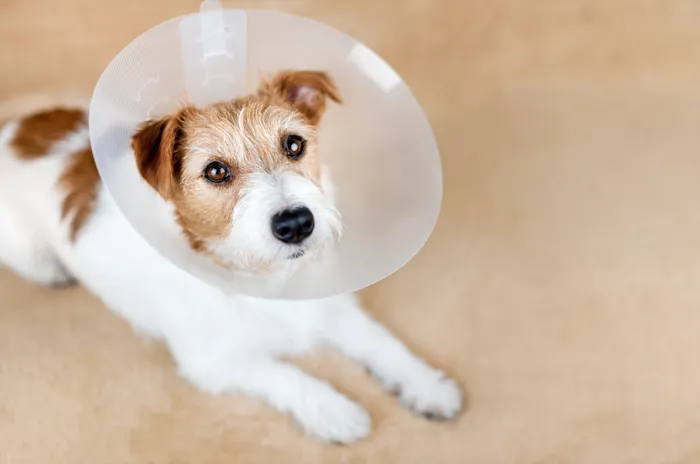
Also, keep the cone on. Nobody enjoys it, but a determined dog can undo a week of healing in about thirty seconds of licking.
If she’s genuinely miserable in a rigid cone, ask about alternatives. Inflatable collars and recovery suits work well for many dogs, though inflatable collars aren’t a great fit for long-nosed breeds that can still reach past them.
How to Keep an Energetic Dog Calm
This is the part nobody warns you about. Two weeks of no running, no jumping, no stairs, and no dog park, with a dog who feels perfectly fine and would very much like to know why.
The trick is swapping physical exercise for mental work. A dog that has spent twenty minutes solving a problem is genuinely tired, without her having moved much at all.
Things that work well:
- Snuffle mats and puzzle feeders: Feed her dinner through one instead of a bowl.
- Scatter feeding: Toss kibble across a towel or a small area of floor and let her sniff it out.
- Frozen stuffed toys: A Kong packed with wet food and frozen can occupy a determined dog for a long time.
- Gentle training: Five minutes of “settle,” “touch,” or name recognition, all done sitting or standing still.
- Lick mats: Licking is naturally calming for dogs, and it’s one of the few self-soothing behaviors you actively want to encourage right now.
For bathroom breaks, keep her on a short leash even in your own yard. Block the stairs with a baby gate if you have one, and lift smaller dogs onto and off furniture, or make the furniture off-limits for two weeks.
When to Call Your Vet
Most recoveries are uneventful. But it’s always worth calling if you notice:
- The incision opening, gaping, or bleeding
- Discharge, particularly if it’s cloudy, yellow, or smells unpleasant
- Swelling that’s growing, hot to the touch, or clearly painful
- Refusing food for more than 48 hours
- Repeated vomiting
- Lethargy that’s getting worse rather than better after the first day or two
- Pain that doesn’t seem controlled by her medication
If something feels off, call us. A quick phone call or a short appointment is cheaper and far less stressful than treating a complication that’s had a few days to develop.
Spay Recovery: The Short Answer
Plan for around 10 to 14 days of visible healing, and a few more weeks of internal healing that you’ll never see. Cone on, lead only, no baths, no jumping, and a vet check before she goes back to normal life.
The hard part is that she’ll seem ready long before she actually is. Get through those two weeks and you’ve protected a decision that benefits her for the rest of her life.
Have a question about your dog’s recovery? Our team is a call away. Contact your local Hometown Veterinary Partners clinic to talk it through.
This article does not constitute medical advice. Always consult a veterinarian for guidance specific to your pet’s health.
Frequently Asked Questions
How long does my dog have to wear the cone after being spayed? Usually the full 10 to 14 days, or until your vet confirms the incision has healed. Only remove it when you’re actively supervising her. Licking is the single most common cause of complications.
When can my dog go up and down stairs again? Avoid stairs for at least two weeks. Climbing puts strain on the abdominal muscles right where the repair was made. Use a baby gate or carry smaller dogs.
Is it normal for my dog to whine after being spayed? In the first day or so, yes. Whining and restlessness are often due to the anesthetic wearing off rather than pain. If it continues past 48 hours, or she seems uncomfortable despite her medication, give us a call.
When can I bathe my dog after spaying? Wait a full two weeks, and until the incision is completely closed and dry. If she gets muddy, spot-clean her paws and legs and keep water away from her belly.
When can she go back to the dog park? Not until after the two-week mark and a clear check from your vet, and even then, build back up gradually over another week or so. Off-lead play with other dogs is the last thing to reintroduce.