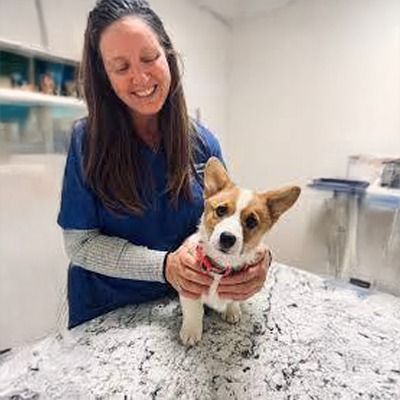

Bringing home a new puppy comes with a long checklist of important milestones, from vaccinations and training to spaying or neutering. Microchipping is another important step that helps protect your puppy if they ever become lost.
Many new pet owners wonder when puppies should be microchipped and whether there is a recommended age to have it done.
The good news is that microchipping is a quick, safe procedure that can be performed at a young age.
Is there a recommended age?
Most puppies can be microchipped as early as a few weeks of age, although many veterinarians perform the procedure during one of a puppy’s early wellness visits.
There is no need to wait until your dog is fully grown.
In fact, early microchipping offers an important benefit: if your puppy accidentally gets lost, they already have permanent identification in place.
Why timing matters
Puppies are naturally curious.
As they grow, they begin exploring new environments, learning boundaries, and encountering unfamiliar situations. Even well-supervised puppies can slip through an open door, escape a yard, or become separated during travel.
Microchipping early helps ensure your puppy can be identified if the unexpected happens.
It is one of those things most owners hope they never need, but are grateful to have when they do.
Common times puppies are microchipped
While there is no single “perfect” age, puppies are often microchipped during:
- Early wellness appointments
- Vaccination visits (Read our guide on pet vaccination costs)
- Adoption through a shelter or rescue
- Spay or neuter procedures
Some breeders and rescue organizations even microchip puppies before they go to their new homes.
What happens during the procedure?
Many owners are surprised by how simple microchipping actually is.
The process typically involves:
- Scanning the microchip before placement
- Inserting the chip beneath the skin
- Confirming the chip is working properly
- Registering the microchip information
The entire appointment usually takes only a few minutes.
The microchip is most commonly placed between the shoulder blades and remains under the skin permanently.
See our full walkthrough on how dog microchipping works for a step by step look at the appointment.
Does microchipping hurt puppies?
The procedure feels similar to a routine injection.
Most puppies tolerate it very well and are awake during the process. While the needle is slightly larger than the one used for vaccinations, the insertion is quick and usually causes only brief discomfort.
Many puppies barely react at all. Because the procedure is so simple, anesthesia is not required.
What information does the microchip store?
A common misconception is that the microchip contains your personal information.
It does not.
The chip stores a unique identification number that links to your contact information in a registration database.
When the chip is scanned, veterinary clinics and shelters can access the registration information and contact you if your puppy is found.
The most important step comes afterward
Getting the microchip implanted is only part of the process.
The chip must also be registered with accurate contact information.
Be sure to:
- Register the chip promptly
- Add a current phone number
- Update your address if you move
- Keep emergency contacts current
An unregistered microchip is much less effective because there is no way to connect the identification number back to you.
Many owners assume that once a microchip is implanted, there is nothing else to think about. While the microchip itself is designed to last for your pet’s lifetime, it is important to keep your registration information current. Learn more about whether pet microchips expire and how to make sure your pet’s information stays up to date.
What if you adopt a puppy that already has a microchip?
Many rescue organizations, shelters, and breeders microchip puppies before adoption.
If your puppy already has a chip, ask for the registration information and verify that ownership has been transferred correctly.
If not, the previous owner or organization may still be listed in the database.
Learn more about how to transfer microchip ownership to make sure your puppy’s information is connected to you.
Why microchips and collars work best together
Some owners wonder if a microchip replaces a collar tag.
The answer is no.
A collar provides visible identification that can help neighbors contact you immediately. A microchip provides permanent backup identification if the collar is lost or removed.
Using both gives your puppy the best possible protection.
Give your puppy a lifetime of protection
Microchipping is one of the simplest ways to help keep your puppy safe. The procedure takes only a few minutes, but the benefits can last a lifetime.
Our team can answer your questions, implant a microchip, and help make sure your puppy’s registration information is set up correctly.
Schedule an appointment today to give your puppy an extra layer of protection.