Microchipping is one of the easiest ways to help protect your dog if they ever become lost. Unlike collars and tags, a microchip provides permanent identification that stays with your dog for life.
The process is quick, safe, and commonly performed during routine veterinary visits.
What is a dog microchip?
A microchip is a tiny device, about the size of a grain of rice, that is implanted just beneath your dog’s skin.
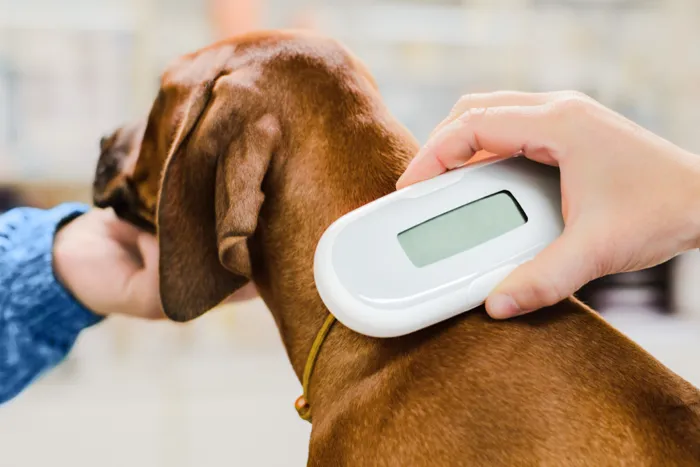
The chip contains a unique identification number that can be read by a special scanner. That number is connected to your contact information through a registration database.
One important thing to know is that microchips are not GPS trackers.
They cannot:
- Track your dog’s location
- Monitor movement
- Show where your dog has been
Instead, they serve as a permanent form of identification if your dog is found and scanned.
How the microchipping process works
Many pet owners are surprised by how simple the procedure is.
A veterinarian or veterinary professional will:
- Scan the microchip before placement
- Insert it beneath the skin using a sterile applicator
- Scan the area again to confirm the chip is working
- Help complete the registration process
The microchip is typically placed between the shoulder blades where it remains under the skin.
For most dogs, the appointment takes only a few minutes.
Does microchipping hurt?
The procedure feels similar to receiving a vaccine or routine injection.
Most dogs tolerate it very well and remain awake throughout the process. While the needle is slightly larger than a vaccination needle, the insertion itself is very quick.
Many dogs barely react at all.
Some owners choose to have the microchip placed while their dog is being spayed or neutered, but anesthesia is not necessary.
Why every dog should have a microchip
Even dogs that are well trained and closely supervised can become lost.
Dogs may:
- Slip out an open door
- Escape a fenced yard
- Become separated during travel
- Get frightened during storms or fireworks
- Run off after wildlife or distractions
While collars and tags are helpful, they can fall off or become damaged. A microchip provides backup identification when other methods fail.
Find out more about the importance of microchipping your pet to see how permanent ID reunites lost dogs with their owners.
The part many owners forget
Getting the microchip implanted is only half of the process. The most important step afterward is registration.
Without registration, the identification number cannot be connected to you if your dog is found.
Be sure to:
- Register the chip promptly
- Update your phone number if it changes
- Update your address if you move
- Keep emergency contact information current
A registered microchip is far more effective than an unregistered one.
Microchip vs collar tag
The best approach is not choosing one or the other. It is using both.
Collar tags are:
- Visible immediately
- Easy for neighbors to read
- Helpful for quick reunions
Microchips are:
- Permanent
- Difficult to lose
- Reliable long term identification
Together, they provide the strongest protection if your dog ever gets lost.
What happens if your dog is found?
If someone brings your dog to a veterinary clinic, shelter, or animal control facility, one of the first things they will usually do is scan for a microchip.
Once the chip is detected:
- The identification number is retrieved
- The registration database is searched
- Your contact information is located
- Reunification efforts begin
This process has helped countless lost pets return home safely.
What if you adopt a dog that already has a microchip?
Many rescue dogs and adopted pets already have microchips.
If that is the case, it is important to verify who is listed as the owner and update the registration information if necessary.
Ownership does not automatically transfer when a pet changes homes.
If you recently adopted a dog, learn more about how to transfer microchip ownership to make sure the chip is linked to your information.
Is microchipping safe?
Microchipping has been used safely in dogs for many years and complications are rare.
The chip contains no battery, requires no maintenance, and remains inactive until scanned. Most dogs never even notice it is there.
What about puppies?
Many pet owners wonder when puppies should be microchipped. The good news is that microchipping can be done at a young age and is often performed during routine veterinary visits or around the time of spay and neuter procedures.
If you have a young dog, learn more about when puppies get microchipped and what to expect during the process.
A simple step that can make a big difference
Microchipping takes only a few minutes, but it can provide lifelong protection for your dog. If they ever become lost, a registered microchip can dramatically improve the chances of being reunited.
Our team can answer your questions, implant a microchip, and help ensure your registration information is accurate and up to date.
Schedule an appointment today to help keep your dog protected.