Every year, millions of pets go missing. Some wander off during walks, some escape from backyards, and others slip out through an open door in a matter of seconds. While collars and ID tags are helpful, they are not foolproof. Tags can break, collars can fall off, and identifying information can become unreadable over time.
Microchipping provides permanent identification that stays with your pet for life. It is one of the most reliable and effective ways to increase the chances of being reunited if your dog or cat ever becomes lost.
What Is a Microchip and How Does It Work?
A pet microchip is a tiny electronic device, about the size of a grain of rice, that is implanted just under the skin between your pet’s shoulder blades. The procedure is quick and similar to receiving a routine vaccination. It does not require surgery or anesthesia and can be done during a standard veterinary visit.
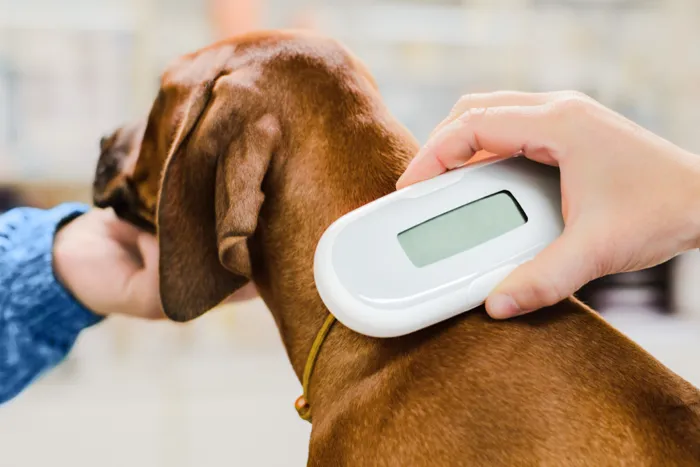
Each microchip contains a unique identification number. When a lost pet is brought to a veterinary clinic or animal shelter, staff use a handheld scanner to detect the chip. The scanner reads the identification number, which is linked to your contact information in a secure registration database. The clinic or shelter can then contact you directly.
It is important to understand that microchips do not function as GPS trackers. They cannot actively track your pet’s location. Instead, they provide permanent identification that works when scanned.
Why Microchipping Significantly Increases Reunification Rates
Microchipping dramatically improves the likelihood that lost pets will be returned home. Studies have shown that dogs with microchips are returned to their owners at much higher rates than those without. The difference is even more significant for cats, who are less likely to wear collars or visible ID tags.
Without permanent identification, shelters may have no way to determine who a lost pet belongs to. Microchips eliminate that uncertainty by providing a direct link between the pet and their owner.
Microchipping is especially important because:
- Collars and tags can be removed or lost
- Visible ID can become damaged or unreadable
- Pets can travel far from where they were lost
- Proof of ownership may be required in certain situations
- Emergencies and disasters can separate pets from families
A microchip provides peace of mind that your pet has lifelong identification.
Even Indoor Pets Are at Risk of Getting Lost
Many pet owners believe microchipping is only necessary for outdoor pets. However, indoor pets frequently go missing due to unexpected situations.
Common scenarios include:
- Doors accidentally left open
- Visitors entering and exiting the home
- Pets slipping out during deliveries
- Windows or screens being pushed out
- Natural disasters or home emergencies
Cats are especially skilled at slipping outside unnoticed. Once outdoors, an indoor cat can quickly become frightened, disoriented, and unable to find their way back home.
Microchipping ensures that if your indoor pet is found and brought to a shelter or veterinary clinic, you can be contacted immediately.
Is Microchipping Safe for Dogs and Cats?
Microchipping is considered extremely safe. The device is designed to remain under the skin and is made from biocompatible materials. Complications are rare.
The procedure itself takes only a few seconds. Most pets tolerate it very well, and it feels similar to a routine injection. There is no battery and no ongoing maintenance required.
During annual wellness exams, your veterinarian can scan your pet’s microchip to confirm that it is functioning properly.
The Importance of Registering and Updating Your Information
A microchip is only effective if the contact information linked to it is accurate. After implantation, pet owners must register the microchip number with a national database.
It is equally important to update your information if:
- You move to a new address
- You change your phone number
- Your email address changes
- Ownership of the pet transfers
Adding a secondary emergency contact can also be helpful in case you are unreachable.
Keeping your information current ensures that shelters and clinics can successfully reunite you with your pet.
Microchipping as Part of Responsible Pet Ownership
Microchipping is a simple but powerful step in responsible pet care. While it does not replace collars and ID tags, it serves as a permanent backup form of identification.
In some areas, microchipping is required by law. It may also be required for international travel, boarding facilities, or certain housing communities.
By microchipping your pet, you are taking proactive steps to protect them in unexpected situations and giving yourself the best possible chance of being reunited if they ever go missing.
Protect Your Pet for Life
Microchipping is quick, affordable, and lifelong. It offers peace of mind knowing that your dog or cat has permanent identification that cannot be lost or removed.
At Hometown Veterinary Partners, we provide safe and efficient microchipping services during routine wellness visits or as a standalone appointment. Our team can also help verify registration details and ensure your information is up to date.
If your pet is not yet microchipped, contact your local Hometown Veterinary Partners clinic today. A microchip may be small, but it can make a life-changing difference in bringing your pet safely back home.