The right treatment for a hot spot on a dog starts with acting quickly, because these sore, moist patches can go from a small pink spot to a raw, painful lesion in a matter of hours. One minute your dog is fine, and by the time you look again, they have licked and scratched a coin-sized area into something much bigger.
Although addressing it early yourself makes a difference, hot spots almost always point to a deeper cause that needs a professional eye. Below is how hot spots get treated, what you can safely handle at home, and when it is time to book a visit.
What Is a Hot Spot on a Dog?
A hot spot is a patch of inflamed, irritated skin that becomes moist, red, and painful. You may hear your veterinarian call it acute moist dermatitis or pyotraumatic dermatitis, but the everyday name describes it well: a warm, angry spot that seems to flare up out of nowhere.
Most hot spots start with an itch. Your dog licks, chews, or scratches at one area, and that self-trauma damages the skin barrier. Once the surface is broken and damp, bacteria that normally live on the skin take advantage, which can lead to and make the area itchier still. That drives more licking, which causes more damage. This itch-and-lick cycle is what allows a tiny irritation to spread so fast.
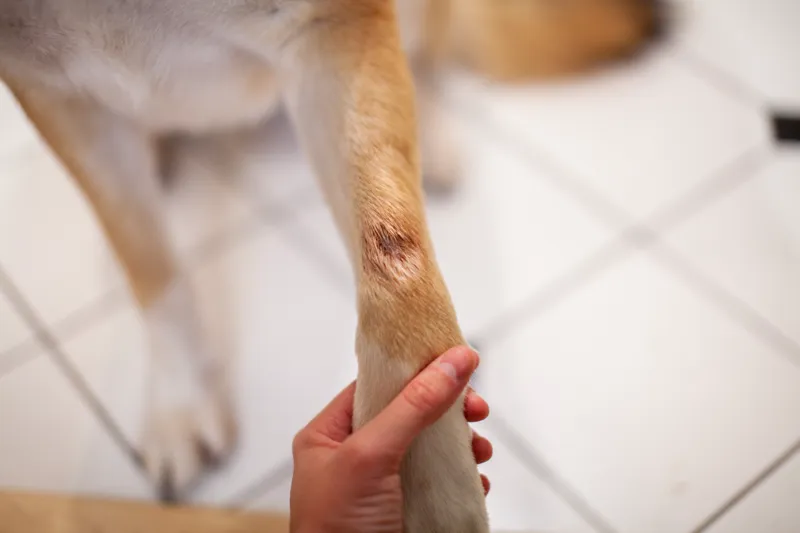
A typical hot spot looks like a round area of hair loss with skin that is red and oozing, or crusty and darker if it has been there for a few days. It is warm to the touch and tender, so your dog may flinch or pull away when you get near it.
What Causes Hot Spots on Dogs?
A hot spot is usually a symptom, not the whole story. Something started the itch, and treating only the surface without finding that trigger is why so many hot spots come back. Common underlying causes include:
- Allergies to food, fleas, or something in the environment
- Fleas and other parasites, which are one of the most frequent culprits
- Trapped moisture from swimming, bathing, or a thick coat that stays damp
- Ear infections, which can drive a dog to scratch at the head and neck
- Matted or unkempt fur that holds moisture and irritates the skin
- Boredom, stress, or anxiety, which can lead to repetitive licking
Because the causes vary so widely, two dogs with identical-looking hot spots may need different care plans. Identifying the root issue is key to getting your dog comfortable and keeping the problem from returning.
How Are Hot Spots on Dogs Treated?
Treating a hot spot on a dog usually involves a few core steps:
- Clip the fur around the spot so the skin can breathe and treatment can reach it
- Clean the area with a gentle, skin-safe solution to lower surface bacteria
- Calm the inflammation and itch so the skin can start to heal
- Stop the licking with a recovery cone or soft collar
- Treat the underlying cause so the hot spot does not return
First, the fur around the hot spot is gently clipped away. This exposes the area to air, prevents hair from trapping moisture against the wound, and lets any treatment reach the skin directly. Next, the spot is cleaned with a gentle, skin-safe solution to remove debris and lower the bacterial load on the surface.
From there, the focus shifts to calming the inflammation and easing the itch so the skin can begin to heal. Your veterinarian will choose the safest, most effective approach for your dog and may recommend something to soothe the area and calm the urge to scratch.
A recovery cone or a soft protective collar keeps your dog from licking and chewing while the skin repairs itself. Most dogs tolerate it well after a day or two, and it allows the rest of the treatment to work.
Finally, your veterinarian works to address the allergy, the fleas, the ear infection, or whatever set things off, which keeps a new hot spot from appearing a week later.
What You Can Safely Do at Home
If you have caught a hot spot early and your dog is otherwise acting normal, there are a few safe things you can do while you arrange a visit. Think of these as a bridge to care, not a replacement for it.
While you arrange a visit, you can:
- Keep the area clean and dry
- Gently trim or part the surrounding fur, if your dog will allow it
- Prevent licking and scratching with a cone or close supervision
- Use a cool, damp cloth for short-term comfort
Do not reach for human medications or ointments. Many products made for people are toxic to dogs or tempting for them to lick off, and some can actually slow healing or make the irritation worse. When in doubt, call your veterinary team for guidance.
When to See a Veterinarian
Because hot spots can grow so quickly and often signal a deeper issue, it is wise to have one looked at rather than waiting to see if it clears on its own. Reach out to your veterinary team promptly if you notice any of the following:
- The spot is spreading, or seems to be getting worse by the hour
- The area looks deep, is oozing, or has an unpleasant odor
- Your dog is in obvious pain or will not leave the area alone
- Hot spots keep coming back, which means the original trigger was never resolved
At , we know these flare-ups rarely happen at a convenient time. Same-day appointments are available at all of our locations, so your dog can get relief as soon as possible.
How to Help Prevent Hot Spots
Once you have dealt with one hot spot, a few consistent habits help keep them from returning. Keep your dog on a reliable parasite prevention plan, since fleas are such a common trigger. Groom regularly to prevent matting and to help a thick or damp coat dry fully. Work with your veterinarian to manage any known allergies. And make sure your dog has enough activity and enrichment, which helps ease the boredom and anxiety that can fuel repetitive licking.
Staying ahead of these triggers will not guarantee your dog never gets another hot spot, but it makes it less likely.
Caring for Your Dog's Skin, Together
A hot spot can look alarming and is uncomfortable for your dog, but it is a treatable condition once you understand what is driving it. Early attention, a little safe home care, and a clear plan to address the root cause will get your dog back to feeling like themselves.
If you have spotted one and are not sure what to do next, our team is here to help. Reach out to your nearest and we will take good care of your pet.
Frequently asked questions
Will a hot spot heal on its own?
Sometimes a very minor irritation settles down, but hot spots tend to spread quickly and become more painful when left alone. Because licking and scratching keep the cycle going, most hot spots need treatment to heal properly, and the underlying trigger still needs to be addressed.
How long does a hot spot take to heal?
With the right care, many hot spots improve within a few days and clear up over one to two weeks. Deeper or recurring spots can take longer to heal.
Are hot spots contagious to other pets or people
Hot spots themselves are not contagious. They are self-inflicted from your dog's own licking and scratching, not something that spreads from pet to pet. That said, the underlying cause, such as fleas, may affect other animals in the home, which is another reason to have it checked.