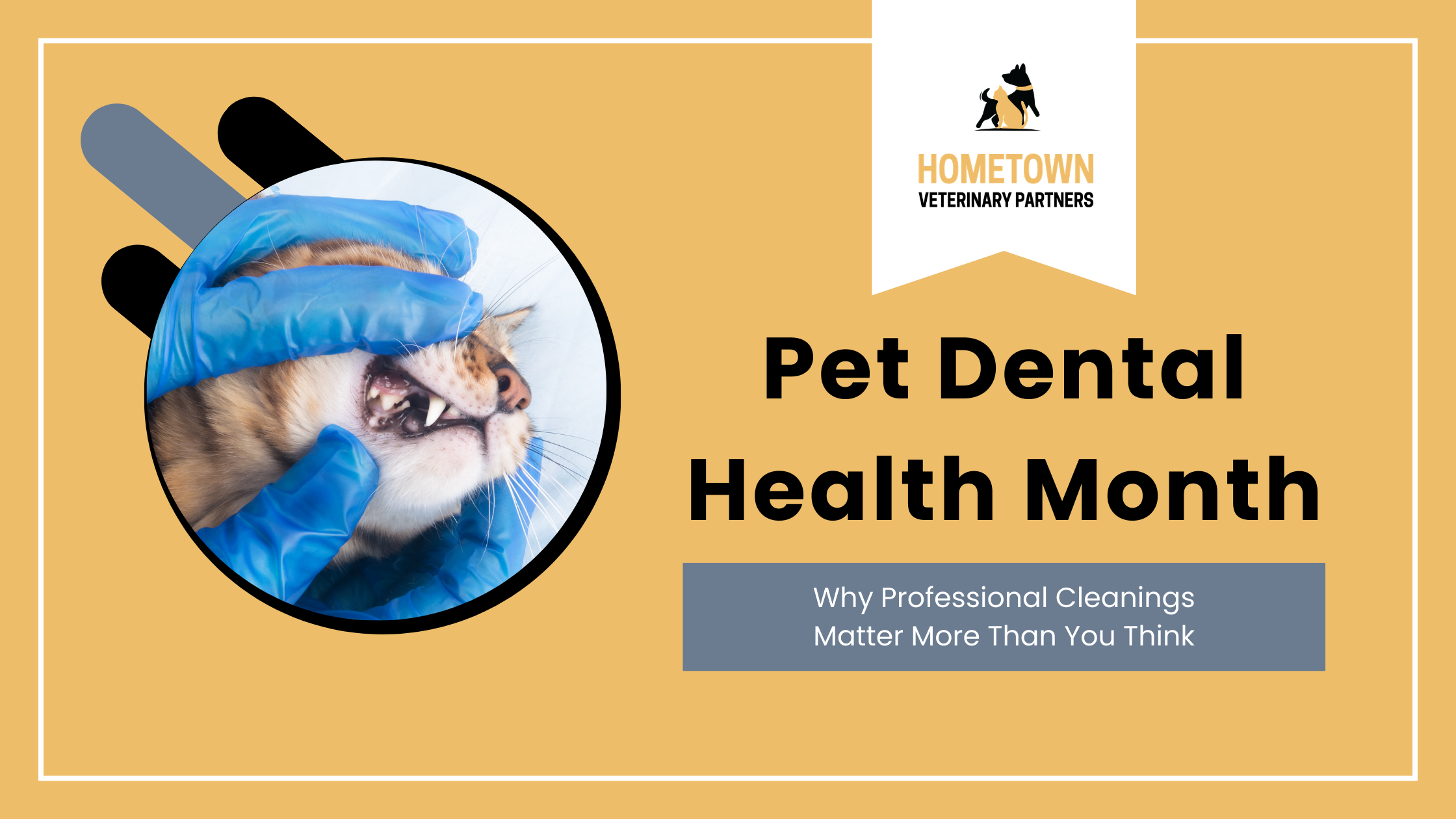
February Is Pet Dental Health Month: Why Professional Cleanings Matter More Than You Think
If your pet’s breath could clear a room, this blog is for you.
February is Pet Dental Health Month, and while dental care might not sound exciting, it’s one of the most important (and most overlooked) parts of your pet’s overall health.
Dental disease doesn’t just affect the mouth. It can impact the heart, liver, and kidneys and it often starts quietly. The good news? It’s preventable.
Let’s break down what pet owners need to know.
How Common Is Dental Disease in Pets?
According to the American Veterinary Medical Association (AVMA), most dogs and cats show signs of dental disease by age 3 (AVMA, avma.org). The American Animal Hospital Association (AAHA) reports periodontal disease is the most common clinical condition seen in adult dogs and cats (AAHA, aaha.org).
In other words: if your pet has teeth, dental disease is a real risk.
What Are the Signs of Dental Disease in Dogs?
One of the biggest challenges with dental disease is that pets are very good at hiding discomfort.
Here are common signs of dental disease in dogs:
- Bad breath (and not just “normal dog breath”)
- Yellow or brown tartar buildup
- Red, swollen, or bleeding gums
- Dropping food while eating
- Chewing on one side of the mouth
- Pawing at the mouth
- Decreased appetite
- Facial swelling in severe cases
Cats can show similar signs, along with hiding more often or becoming irritable.
If you’re wondering about bad breath in dogs causes, dental disease is the most common reason. Persistent foul odor often signals infection below the gumline, not just something a dental treat can fix.
What Is Cat Dental Disease?
Cat dental disease frequently includes gingivitis, periodontal disease, and a painful condition called tooth resorption (where the tooth structure breaks down).
Cats are especially prone to hiding oral pain. Many continue eating despite significant discomfort. That’s why routine exams are critical, we often catch dental issues long before owners notice changes at home.
Left untreated, bacteria from dental disease can enter the bloodstream and affect internal organs. That’s why dental health isn’t cosmetic, it’s medical.
What Happens During a Professional Dog Teeth Cleaning?
A professional dog teeth cleaning is much more than scraping visible tartar off the surface.
Here’s what it typically involves:
- Pre-anesthetic exam and bloodwork
Ensures your pet is healthy enough for anesthesia. - Safe anesthesia and monitoring
This allows a thorough cleaning under the gumline — where most disease lives. - Full-mouth dental X-rays
According to AAHA dental guidelines, up to 60% of dental disease is hidden below the gumline (AAHA Dental Care Guidelines). X-rays help us identify issues you can’t see. - Scaling and polishing
We remove plaque and tartar above and below the gumline, then polish to smooth the enamel and slow future buildup. - Treatment of diseased teeth if needed
Extractions or additional procedures may be performed if teeth are severely infected or damaged.
Anesthesia is necessary because pets won’t sit still for a deep cleaning and cleaning below the gumline without anesthesia is not effective or safe.
Why Dental Cleanings Matter Beyond Fresh Breath
Untreated periodontal disease can lead to:
- Tooth root abscesses
- Bone loss in the jaw
- Chronic pain
- Bacteria entering the bloodstream
- Potential impact on the heart, liver, and kidneys
Research published in veterinary journals shows associations between periodontal disease and systemic health complications (AVMA, AAHA).
Think of dental care as preventive medicine and not just hygiene.
Let’s Talk About Dog Dental Cleaning Cost
One of the most searched phrases online is “dog dental cleaning cost.” And that makes sense as pet owners want to plan ahead.
The cost of a professional dental cleaning varies depending on:
- Your pet’s size
- Severity of dental disease
- Need for extractions
- Required medications
- Pre-anesthetic lab work
- Dental X-rays
While pricing varies by region and hospital, professional cleanings reflect:
- Trained medical staff
- Advanced monitoring equipment
- Anesthesia safety protocols
- Diagnostic imaging
- Sterile surgical standards
It’s important to compare apples to apples. Anesthesia-free cleanings may appear less expensive, but they do not address disease below the gumline and are not recommended by major veterinary organizations like AAHA.
The real value of dental care is preventing more expensive (and painful) problems later.
How Often Does My Pet Need a Dental Cleaning?
This depends on breed, genetics, home care, and individual health.
Small-breed dogs often need dental cleanings more frequently due to crowded teeth. Some large breeds may go longer between procedures.
Your veterinarian can assess your pet’s mouth during annual exams and help create a personalized plan.
What You Can Do at Home
Professional cleanings are the gold standard — but home care matters too.
Helpful steps include:
- Daily brushing with pet-safe toothpaste
- VOHC-approved dental chews (vohc.org)
- Dental diets when recommended
- Routine veterinary exams
Even brushing a few times per week can significantly reduce plaque accumulation.
Why Pet Dental Health Month Matters
February is a great reminder to check in on your pet’s oral health — especially before dental disease progresses.
If your pet has:
- Persistent bad breath
- Visible tartar
- Red gums
- Difficulty chewing
It’s time for an exam.
Dental disease is one of the most preventable conditions we see. And pets feel so much better after treatment — many owners notice improved energy, appetite, and even mood.
Turns out, living with a toothache isn’t fun for anyone.
Ready to Schedule a Dental Exam?
If you have questions about professional dog teeth cleaning, concerns about cat dental disease, or want to understand what your pet’s specific dog dental cleaning cost estimate might look like, we’re here to help.
Schedule a dental evaluation today and give your pet something to really smile about.
To find a location near you, please visit our locations page.