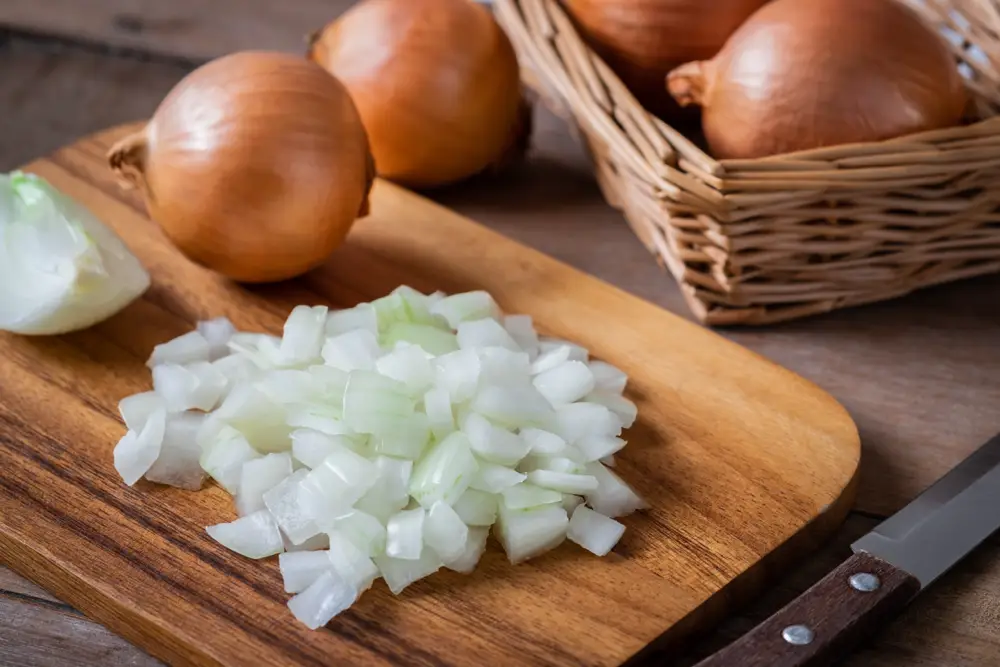
No, dogs can’t eat onions. Raw, cooked, fried, dried and powdered onions can all be toxic to dogs, as can other members of the allium family, including garlic, leeks, chives and shallots. Signs of poisoning may be delayed, so don’t wait for your dog to look sick before getting advice.
At Thanksgiving, onions and garlic can be hiding in foods you might not expect, including stuffing, gravy, green bean casserole, mashed potatoes, broth and turkey seasoning. A curious dog can also get into leftovers or scraps left within reach.
If your dog has just eaten onion or garlic: Call your veterinarian or a pet poison control service now, even if your dog seems completely fine. Don’t make your dog vomit unless a veterinarian or poison control professional tells you to.
Why Can’t Dogs Eat Onions?
Onions contain compounds that can damage a dog’s red blood cells. When too many red blood cells are damaged, the body may not be able to replace them quickly enough, which can lead to anemia.
The risk applies to onions in different forms. Raw onion, cooked onion, fried onion, dried onion and onion powder can all be a concern. Cooking does not make onion safe for dogs, and concentrated forms such as onion powder can be found in surprisingly small amounts in seasoning blends, sauces and packaged foods.
The effects can also build up if a dog eats smaller amounts repeatedly.
One of the biggest problems with onion poisoning is that a dog may look normal after eating it. Stomach upset can occur earlier, while signs associated with damage to the red blood cells may take longer to appear. That’s why it’s important to call your veterinarian even if your dog seems fine.
Onions, Garlic and Other Alliums
Onions belong to a group of plants called alliums. Several common ingredients used in cooking belong to the same family and can pose a risk to dogs.
| Plant | Common forms | What to know |
|---|---|---|
| Onion | Raw, cooked, fried, dried, powdered | All forms can be toxic to dogs |
| Garlic | Fresh, cooked, powdered, dried, supplements | Garlic also carries a risk and can be found in many seasonings and prepared foods |
| Leeks | Fresh, cooked | Another member of the allium family |
| Chives | Fresh, dried, cooked | Often used as a garnish or seasoning |
| Shallots | Fresh, cooked, dried | Closely related to onions and can also be harmful |
| Scallions or green onions | Fresh, cooked | The same family as onions, and should not be given to dogs |
You may also see onion or garlic listed on food labels as onion powder, garlic powder, dried onion or seasoning blends.
Garlic should not be used as a home flea treatment for dogs. If you’re considering a supplement or any product containing garlic, talk to your veterinarian first.
How Much Onion Is Toxic to Dogs?
There isn’t an amount of onion that we recommend giving a dog. If your dog has eaten onion, the safest approach is to contact your veterinarian or a pet poison control service rather than trying to decide whether they have eaten enough to be at risk.
The potential risk depends on several factors, including:
- How much your dog ate
- Your dog’s size and overall health
- Whether they ate fresh onion or a more concentrated form such as onion powder
- Whether they ate one larger amount or smaller amounts over several days
- Any individual factors that may affect their sensitivity
This is why searching for a specific number or trying to calculate a dose at home can be misleading.
If your dog has eaten onion, garlic or another allium, have the food packaging or recipe available if possible. Your veterinarian or poison control professional can use that information, along with your dog’s weight and the amount eaten, to assess the situation.
Don’t wait for symptoms before calling. A dog can appear completely normal while the effects are developing.
Signs of Onion Poisoning in Dogs
The signs of onion poisoning can vary, and they may not all appear at once. Stomach upset can occur earlier, while signs associated with anemia may develop later.
| Earlier signs | Later signs |
|---|---|
| Vomiting | Unusual tiredness or weakness |
| Diarrhea | Pale gums |
| Drooling | Fast breathing |
| Reduced appetite | Fast heart rate |
| Abdominal discomfort | Red or brown urine |
| Collapse |
The delayed nature of onion poisoning is important. Your dog seeming well immediately after eating onion doesn’t necessarily mean there is no risk.
If your dog develops vomiting, diarrhea or other concerning symptoms, contact your veterinarian. You can also read our guide to what to do if your dog has vomiting and diarrhea.
If your dog is weak, collapses, has trouble breathing or appears seriously unwell, seek emergency veterinary care.
My Dog Ate Onion. What Should I Do?
If your dog has eaten onion, garlic or food containing either ingredient, don’t wait for symptoms before getting advice.
- Move your dog away from the food. Make sure they can’t eat any more.
- Figure out what they ate. Keep the packaging, recipe or ingredient list if you have it. Note roughly how much was eaten and when.
- Have your dog’s weight ready. Your veterinarian or poison control professional will use this information when assessing the risk.
- Call your veterinarian or a pet poison control service now. This is important even if your dog seems completely normal.
- Don’t make your dog vomit unless you’re specifically told to. A veterinarian or poison control professional can tell you whether this is appropriate and how it should be done safely.
- Follow the advice you’re given. Your veterinarian may recommend monitoring, a follow-up appointment or further testing depending on what your dog ate.
- Watch for delayed signs. If your dog develops weakness, pale gums, unusual tiredness, breathing changes, red or brown urine, vomiting or other concerning symptoms, contact your veterinarian again.
If your dog eats onion outside your veterinarian’s normal hours or on Thanksgiving Day, contact an emergency veterinary hospital. Hometown Veterinary Partners does not provide emergency veterinary services. You can also contact a pet poison control service, such as the ASPCA Animal Poison Control Center or Pet Poison Helpline, for guidance.
What Might the Vet Do?
Your veterinarian will assess what your dog ate, how much they may have consumed and when it happened. If the exposure was recent and it is considered appropriate, they may safely induce vomiting.
Depending on the situation, treatment may include activated charcoal, fluids, monitoring or blood tests to check your dog’s red blood cells. Your veterinarian may also recommend a follow-up check because signs of anemia can develop after the initial exposure.
Your veterinarian will advise on the most appropriate next step or refer you for emergency care if your dog needs a higher level of treatment.
Where Do Onions and Garlic Hide?
Onion and garlic can be hidden in everyday foods and ingredients, including:
- Broths, stocks and soups
- Gravy and sauces
- Seasoning blends and rubs
- Baby food
- Pizza and burgers
- Meatballs and meatloaf
- Takeout food
- Dips and prepared sides
- Some deli and processed meats
Check ingredient labels carefully, particularly on foods you’re considering sharing with your dog. Look for terms such as onion powder, garlic powder, dried onion and seasoning blends.
If you’re not sure whether a food contains onion or garlic, don’t give it to your dog.
Thanksgiving Dishes With Hidden Onion and Garlic
Thanksgiving meals can contain onion and garlic in several dishes, even when they’re not obvious ingredients.
| Dish | Where the onion or garlic may be | What to do |
|---|---|---|
| Stuffing | Onion, garlic, seasoning and sometimes raisins | Keep it away from your dog |
| Gravy | Onion, garlic, broth, seasoning and fat | Don’t share with your dog |
| Green bean casserole | Fried onions, soup or seasoning mixes | Keep it off your dog’s plate |
| Mashed potatoes | Garlic, butter, salt or seasoning | Don’t share unless your veterinarian confirms the ingredients are appropriate |
| Turkey rubs and brines | Onion or garlic powder, herbs and other seasonings | Give your dog plain turkey meat instead |
| Turkey drippings | Fat, seasoning and ingredients from the cooking process | Keep away from your dog |
| Creamed or roasted onions | Onion itself, plus butter or other rich ingredients | Not suitable for dogs |
| Garlic bread and rolls | Garlic, butter and seasoning | Keep away from your dog |
| Leftover soups and broth | Onion, garlic, stock and seasoning | Check the ingredients before offering any |
Thanksgiving can also bring other food hazards. Turkey bones and skin, grapes and raisins, chocolate desserts and sugar-free baked goods can all cause problems for dogs.
A few simple precautions can help:
- Scrape plates straight into a secure, lidded trash can.
- Ask guests not to share food with your dog.
- Keep your dog away from the kitchen while you’re preparing the meal.
- Store leftovers somewhere your dog cannot reach.
- Keep food packaging and scraps out of reach.
Other Times Onion Is Around
The same risks apply outside Thanksgiving. Christmas and other holiday roasts, cookouts, pizza nights and takeout meals can all contain onion or garlic.
If your dog is a persistent kitchen scavenger, take extra care with food scraps, packaging and leftovers. For more advice on keeping pets safe around holiday hazards, see our holiday safety tips for pets.
Dog-Safe Foods to Share Instead
If you want your dog to have a little something while the rest of the family is eating, keep it plain.
A small amount of plain, fully cooked turkey meat without skin, bones or seasoning may be appropriate for many dogs. Plain cooked green beans or carrots without butter, salt or seasoning can also be suitable options.
If your dog has a special diet, food allergy, sensitive stomach or other dietary restriction, ask your veterinarian before offering new foods.
Get Help From Hometown Veterinary Partners
If your dog has eaten onion, garlic or food containing either ingredient, don’t wait for symptoms before getting advice.
Hometown Veterinary Partners offers same-day appointments for pets with illnesses and concerns that need prompt attention. Our veterinary teams can assess your dog’s situation and advise you on the next step.
Hometown Veterinary Partners is not an emergency service. If your dog is showing signs of a life-threatening emergency, seek care from an emergency veterinary hospital.
For non-life-threatening concerns, find your nearest Hometown Veterinary Partners hospital.
Frequently Asked Questions
Can dogs eat cooked onions?
No. Cooking, frying or drying onions does not make them safe for dogs. Dried and powdered onion can be particularly concerning because these forms are concentrated and can be hidden in seasonings and prepared foods. If your dog has eaten cooked onion, contact your veterinarian or a pet poison control service for advice.
My dog ate a small piece of onion. Will it be OK?
It depends on factors including your dog’s size, the amount eaten and the form of onion involved, so it’s safest to call your veterinarian or a pet poison control service rather than guessing. A dog may appear fine initially, and delayed signs mean that a normal-looking dog isn’t necessarily in the clear.
How long after eating onion will a dog get sick?
Stomach upset may occur earlier, while signs associated with anemia can take longer to appear. The timing can vary, so don’t wait for your dog to become sick before calling for advice. If your dog has eaten onion or garlic, contact your veterinarian or a pet poison control service as soon as possible.
Can my dog have a little stuffing or gravy at Thanksgiving?
It’s best not to share stuffing or gravy with your dog. These dishes often contain onion, garlic or their powders, as well as fat and salt, and some stuffing recipes contain raisins. If you want to give your dog a Thanksgiving treat, plain turkey meat without skin, bones or seasoning is a safer option.