
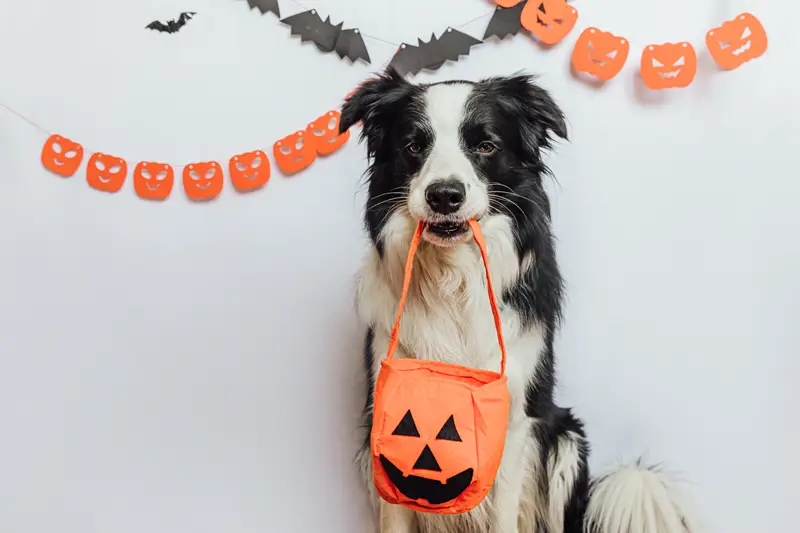
Halloween brings a lot of candy into the house, and dogs are quick to investigate anything that smells sweet. So here is the direct answer: no, dogs cannot safely eat chocolate. It is toxic to them, and the risk climbs during a holiday built around bowls of treats left within reach.
This guide explains why chocolate is dangerous to dogs, the warning signs to watch for, what to do if your dog gets into it, and how to keep your dog safe during the Halloween season.
Why is chocolate toxic to dogs?
Chocolate contains two compounds called theobromine and caffeine. People break these down quickly, but dogs process them far more slowly, so the compounds can build up in the body and start to affect the heart and nervous system. That is why an amount that seems harmless to a person can make a dog seriously ill.
Cats are affected by the same compounds, though they tend to be less interested in chocolate, so most cases involve dogs. For both species, the safest approach is to keep all chocolate where pets cannot get to it.
How much chocolate is dangerous? The type matters
Not all chocolate carries the same risk. The darker and more bitter the chocolate, the more theobromine it contains, and the greater the threat to your dog. Here is a general guide from lowest to highest risk:
- White chocolate: the lowest risk, though the high fat content can still upset the stomach
- Milk chocolate: less potent, but a real concern in larger amounts
- Dark and semisweet chocolate: dangerous even in smaller amounts
- Baker’s chocolate and cocoa powder: the highest risk of all
Your dog’s size and the amount eaten both matter, which means there is no amount of chocolate that is reliably safe. A few bites of dark chocolate can affect a small dog considerably more than a large one. Watch out for chocolate-covered raisins in particular, since they pair two hazards in one treat.
Other Halloween candy that is dangerous for dogs
Chocolate gets the most attention, but it is not the only thing in a candy bowl that can harm your dog. Keep these away from pets as well:
- Xylitol, a sweetener found in many sugar-free candies and gums, which is highly toxic to dogs
- Raisins and grapes, which can cause serious kidney problems
- Macadamia nuts, which can trigger weakness and tremors
- Candy wrappers and lollipop sticks, which pose a choking and blockage risk when swallowed
Because dogs rarely stop to unwrap anything, the packaging can be as much of a problem as the candy inside.
Signs your dog ate chocolate
Symptoms do not always appear right away. They can take several hours to show up, so do not take a wait-and-see approach if you know your dog got into chocolate. Signs to watch for include:
- Vomiting or diarrhea
- Restlessness or unusual hyperactivity
- A rapid or irregular heartbeat
- Increased thirst and urination
- Muscle tremors
- Seizures in severe cases
What to do if your dog eats chocolate
Chocolate is a common problem: it accounts for about 14 percent of the cases reported to the ASPCA Animal Poison Control Center, and dogs are by far the most frequent offenders. If you think your dog has eaten chocolate, act promptly and calmly:
- Note the type of chocolate and roughly how much your dog ate, and find the wrapper or label if you can.
- Do not wait for symptoms to appear before taking action.
- Call your veterinarian or the ASPCA Animal Poison Control Center right away for guidance based on your dog’s size and what was eaten.
- Do not try to make your dog vomit unless a veterinary professional tells you to.
- If your dog ate a large amount, got into dark or baker’s chocolate, or is a small breed, treat the situation as urgent and get care right away.
For questions and same-day sick visits, the team at Hometown Veterinary Partners is here to help you decide on the right next step. If a case involves a large or toxic amount, a pet poison helpline or a nearby emergency facility can provide immediate, round-the-clock support.
How to keep your dog safe this Halloween
A few simple habits can prevent most Halloween candy trouble:
- Store candy sealed and up high, and let children know to keep it away from pets
- Check trick-or-treat bags and children’s rooms, where candy tends to end up
- Offer your dog a few plain, dog-safe treats so they feel included
- Keep an eye on the door during trick-or-treat hours, since an open door and a busy evening make it easy for a curious dog to slip out
When to call your vet this Halloween
If you have questions about your dog’s health this Halloween, or you would like to schedule a same-day sick visit, reach out to your nearest Hometown Veterinary Partners location. A quick call can give you peace of mind and a clear next step.
Frequently asked questions
Can dogs eat a small amount of chocolate?
There is no reliably safe amount of chocolate for dogs. A small amount of milk chocolate may cause only a mild stomach upset in a large dog, while the same amount of dark chocolate could seriously affect a small one. When in doubt, call your veterinarian.
Is milk chocolate or dark chocolate worse for dogs?
Dark chocolate is worse. It contains more theobromine per ounce than milk chocolate, so it takes less of it to cause a problem. Baker’s chocolate and cocoa powder are the most dangerous of all.
How long after eating chocolate will a dog show symptoms?
Symptoms often take several hours to appear and can last a day or longer. Because signs can be delayed, it is best to seek advice as soon as you know chocolate was eaten rather than waiting to see how your dog reacts.
Can dogs eat white chocolate?
White chocolate has very little theobromine, so poisoning is unlikely, but it is high in fat and sugar and can still cause stomach upset. It is best kept away from your dog.