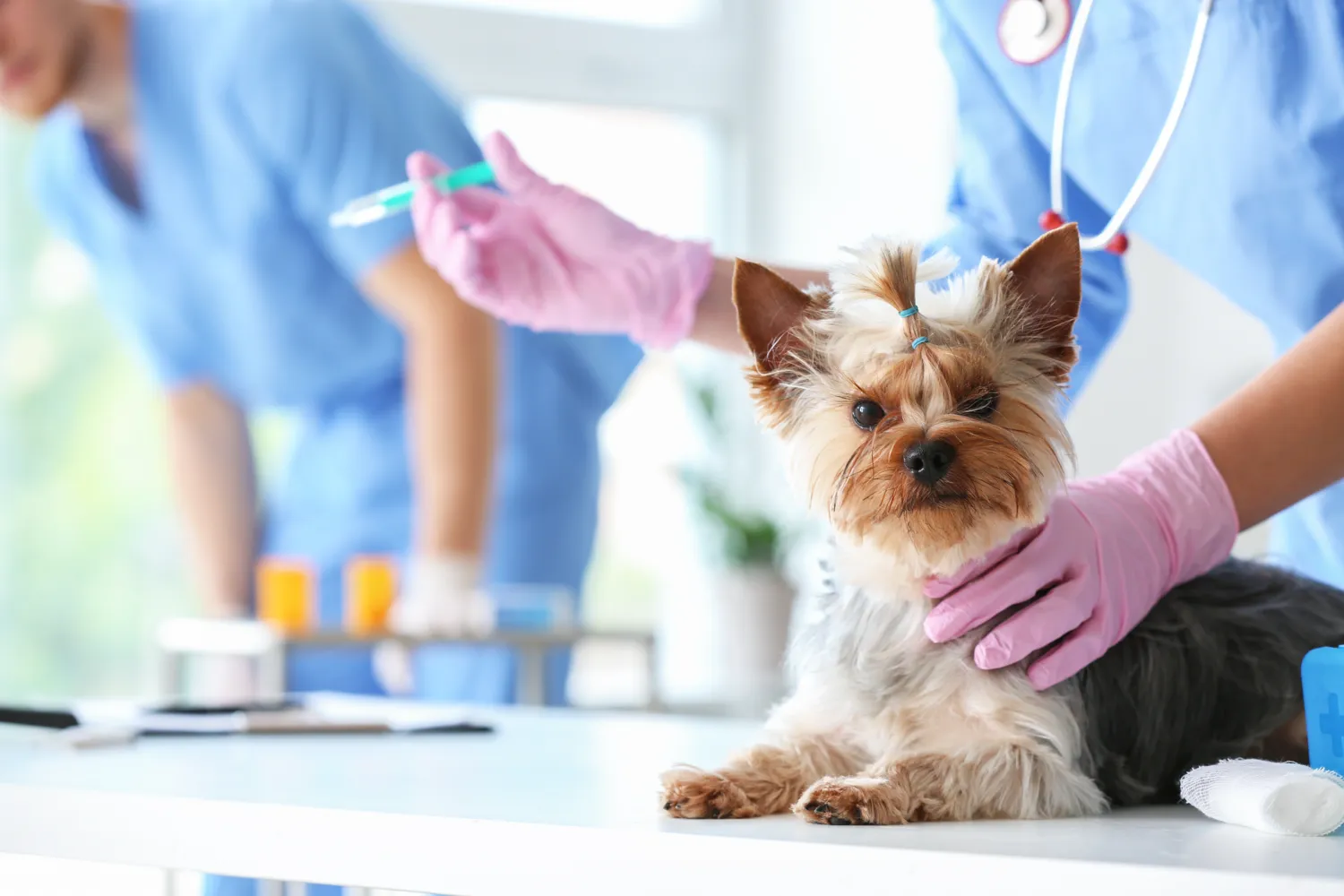
The DHPP vaccine is a core combination shot that protects your dog against four serious viral diseases in a single injection. It is one of the most important vaccines your dog will receive, from their first months as a puppy through their adult years.
Below, we walk through what DHPP protects against, when your dog needs it, and what you can expect around the visit.
What is the DHPP vaccine for dogs?
DHPP is what veterinarians call a core vaccine, meaning it is recommended for every dog, whatever their breed or living situation. It is also a combination vaccine, which means it bundles protection against several diseases into one shot instead of requiring a separate injection for each.
You may also hear DHPP called the “5-in-1” vaccine for dogs. The number in these nicknames can vary because the adenovirus component protects against two related illnesses, so the same shot is sometimes counted as covering four diseases and sometimes five.
Vaccines for dogs generally fall into two groups:
- Core vaccines, which protect against diseases that are widespread, highly contagious, and often severe. DHPP sits in this group.
- Lifestyle vaccines, which your veterinarian may recommend based on where your dog goes and what they are exposed to, such as boarding facilities, dog parks, or wooded areas.
Because the diseases in the DHPP vaccine have no cure, prevention through vaccination is the most reliable way to keep your dog safe.
What does DHPP stand for?
Each letter in DHPP represents a disease the vaccine guards against:
- D is for distemper. A contagious virus that can affect the respiratory, digestive, and nervous systems. It is often serious and has no cure, which is why prevention matters so much.
- H is for hepatitis. Caused by canine adenovirus, this can affect the liver and other organs, and severe cases can be life-threatening.
- P is for parvovirus. A hardy virus that spreads easily and is especially dangerous for young puppies, in whom it can progress quickly.
- P is for parainfluenza. A respiratory virus that contributes to the coughing and congestion many owners associate with kennel cough.
These four viruses are bundled into that single DHPP shot.
DHPP, DAPP, and DA2PP: Are they the same vaccine?
You may see your dog’s vaccine written a few different ways. In most cases, DHPP, DAPP, and DA2PP refer to the same core protection against distemper, hepatitis (adenovirus), parvovirus, and parainfluenza. The differences usually come down to how the adenovirus component is labeled.
You might also come across DHLPP, which adds protection against leptospirosis. If you are ever unsure which version your dog has had, your veterinary team can look at the records and explain exactly what is covered.
When does a dog need the DHPP vaccine?
Puppies receive the DHPP vaccine as a series rather than a single shot, because their immunity needs to build gradually. A typical schedule looks like this:
- A first dose at around six to eight weeks of age.
- Follow-up doses every few weeks until roughly sixteen weeks of age.
- A booster about one year later.
- Adult boosters every one to three years, depending on your veterinarian’s guidance.
Your veterinarian will confirm the right timing for your individual dog, since factors like age, health history, and lifestyle can all shape the schedule.
Are there side effects of the DHPP vaccine?
The DHPP vaccine has a long track record and is considered very safe. Most dogs feel completely normal afterward, and any reaction tends to be mild and short-lived. Common, minor signs can include:
- Tenderness or a small bump at the injection site.
- Mild tiredness for a day or so.
- A slightly reduced appetite.
- A low-grade fever.
These usually settle within a day. More serious reactions are rare, but signs such as vomiting, facial swelling, hives, or difficulty breathing call for prompt attention. If you notice anything that worries you after a vaccination, contact your veterinary team right away so they can advise you.
Keeping your dog protected with Hometown Veterinary Partners
Staying current on core vaccines like DHPP is one of the simplest ways to give your dog a long, healthy life. At Hometown Veterinary Partners, we take a personalized approach to your dog’s vaccine plan, walking you through what they need, without the jargon.
If your dog is due for a vaccine or you are starting a new puppy on their series, we offer same-day and weekend appointments to fit your schedule. Reach out to your local Hometown Veterinary Partners team to book a visit.
Frequently asked questions
Is DHPP a core vaccine for dogs?
Yes. DHPP is considered a core vaccine, which means it is recommended for all dogs because the diseases it protects against are widespread, serious, and highly contagious.
How long does the DHPP vaccine last?
After the initial puppy series and the first booster, most adult dogs receive a DHPP booster every one to three years. Your veterinarian will recommend the right interval for your dog.
Do indoor dogs need the DHPP vaccine?
Yes. Even dogs who spend most of their time indoors can be exposed to these viruses, which can be carried inside on shoes, clothing, and hands. DHPP remains recommended for indoor dogs.
Can a titer test replace a DHPP booster?
A titer test is a blood test that measures your dog’s existing antibody levels. In some cases, it can help your veterinarian decide whether a booster is needed yet. Whether titer testing is right for your dog is a conversation to have with your veterinary team.
Is DHPP the same as the distemper shot?
The DHPP vaccine includes distemper protection, so it is sometimes called the distemper shot. It also protects against hepatitis, parvovirus, and parainfluenza in the same injection.