One of your dog's eyes is red and watery, she keeps pawing at it, and you want to fix it before it gets worse. If you are trying to figure out how to treat a dog eye infection, the first thing to know is that the right treatment depends on what is causing it. Eyes also do not give you much room to wait and see. Catching the signs early and knowing which steps are safe at home gets your dog relief sooner.
Signs Your Dog May Have an Eye Infection
Dogs cannot tell us their eye hurts, so they often show us instead. Watching for a few common signs helps you catch a problem early, while it is still easy to treat.
Keep an eye out for:
- Redness in or around the eye
- Swelling of the eyelid or the tissue around the eye
- Squinting or holding the eye closed
- Excessive tearing or watering
- Yellow or green discharge
- Pawing at the eye or rubbing the face on furniture and carpet
- Sensitivity to bright light
Discharge gives you a clue about what is going on. Clear, watery discharge tends to point toward irritation or allergies, while thick yellow or green discharge is more often linked to a bacterial infection.
What Causes Eye Infections in Dogs
Eye infections in dogs have several common causes, and the right treatment depends on which one is behind it. The most frequent include:
- A scratch on the surface of the eye, often from a stick, a grain of sand, or your dog's own paw
- Foreign material like grass seeds or dust working its way in
- Dry eye, where the eye does not make enough tears to stay healthy
- Conjunctivitis, an inflammation of the pink tissue around the eye
- Allergies, which are also the most common underlying trigger for a dog ear infection, or eyelid and eyelash problems
Because these causes overlap and often look alike, guessing at home rarely helps. Always get a professional to help pin down the cause.
Eye Allergies or Eye Infection? How to Tell the Difference
Allergies and infections can look similar. Both can leave the eye red, watery, and uncomfortable, which makes them easy to confuse at home.
One simple rule of thumb helps. If only one eye is affected, the cause is more likely to be an infection or an injury to that eye. If both eyes are affected at once, allergies become the probable reason, since an allergic reaction tends to affect the whole body rather than a single spot.
This is only a starting point, not a diagnosis. Allergies can also lead to a secondary infection, so the two problems sometimes appear together. A proper exam is the only reliable way to know for sure.
How to Treat a Dog Eye Infection
Since treatment depends on the cause, the first job is always to find out what is actually going on. During a visit, your veterinarian looks closely at the surface of the eye, checks how well it is producing tears, and looks for anything trapped that should not be there. Once the cause is clear, treatment can be aimed directly at it rather than at the symptoms alone.
For some dogs, that means addressing an infection directly. For others, it means treating an underlying issue such as dry eye or an allergy, or gently removing a foreign object. Because the right treatment varies so much from one dog to the next, your veterinarian will build a plan that fits your dog specifically.
At , same-day and weekend appointments mean you do not have to wait days to get your dog looked at when an eye starts to bother her.
Can You Treat a Dog Eye Infection at Home?
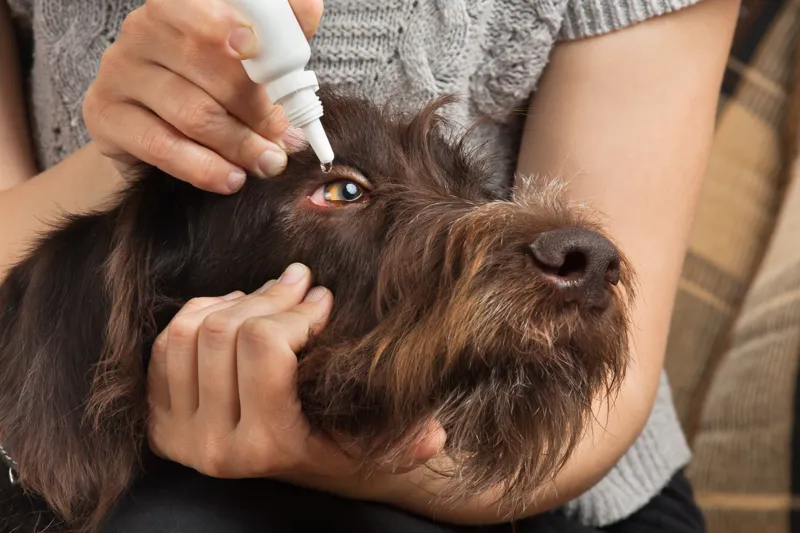
No, not on your own. Reaching for human eye drops or medication left over from a past issue can do more harm than good. A product that helped with one problem may be wrong for this one, and the eye can worsen quickly when it is treated with the wrong thing.
There is one safe step you can take while you arrange a visit. Gently rinsing the eye with lukewarm water or a sterile saline solution can help flush out dust or debris and ease some of the discomfort. Use a clean, damp cloth or cotton pad and wipe outward from the inner corner.
Beyond that, the safest move is to let your veterinary team take a proper look. The eye is unforgiving, and a small problem can become a bigger one fast.
When Your Dog's Eye Needs to Be Seen
Most eye infections are urgent rather than life-threatening, which makes them a good fit for a same-day sick visit. Getting your dog seen quickly gives her the best chance to heal well and avoid complications.
A suddenly cloudy or bulging eye, clear pain, or an eye your dog is holding tightly shut all call for prompt attention. A serious eye injury can go beyond the scope of urgent care, so when something looks severe, call ahead so the team can guide you.
For the everyday red, weepy, or irritated eye, a quick appointment is usually all it takes to get your dog back to feeling like herself.
Helping Prevent Future Eye Problems
A few simple habits help protect your dog's eyes. Keep the fur around her face trimmed so it does not brush against the surface of the eye. After a dusty or windy walk, a gentle rinse can help clear out anything that has settled in. Discourage her from hanging her head out of the car window, where wind and flying grit can cause trouble. Routine checkups help too, since they give your veterinary team a chance to spot small issues before they grow.
Caring for Your Dog's Eyes, Together
If your dog's eye seems red, painful, or just not right, the team at Hometown Veterinary Partners is here to help with same-day care. or give us a call, and we will get your dog comfortable again.
Frequently asked questions
How do I know if my dog has an eye infection?
Look for redness, swelling, squinting, excessive tearing, or yellow or green discharge. Your dog may also paw at the eye or keep it closed. If the eye looks different from usual or seems to bother her, it is worth having it checked.
Can a dog eye infection heal on its own?
It is not worth the risk of waiting to find out. Some mild irritation may settle, but a true infection usually needs treatment aimed at the cause, and the eye can worsen quickly when it is left alone. A quick visit is the safest way to know what you are dealing with.
Is a dog eye infection an emergency?
Most eye infections are urgent rather than life-threatening, which makes them a good fit for a same-day sick visit. Some signs mean you should not wait, though, such as a suddenly cloudy or bulging eye, obvious pain, or an eye held tightly shut. When something looks severe, call ahead so the team can guide you.
What can I do for my dog's eye infection at home?
The safest step at home is gently rinsing the eye with lukewarm water or sterile saline to flush out dust or debris. Avoid human eye drops or any leftover medication, since the wrong product can make things worse. Beyond a gentle rinse, let your veterinary team take a proper look.