If your dog will not stop shaking its head or scratching at one ear, an ear infection is a likely reason. These infections are common in dogs; they are usually uncomfortable, and they almost always need a veterinarian to resolve properly. Below is what treatment involves, what you can do at home, what to avoid, and how to tell when your dog should be seen.
How Do You Know Your Dog Has an Ear Infection?
The signs of an ear infection tend to show up quickly, and most are easy to spot once you know what to look for.
Watch for:
- Head shaking or tilting to one side
- Scratching or rubbing at the ear
- A yeasty or unpleasant odor
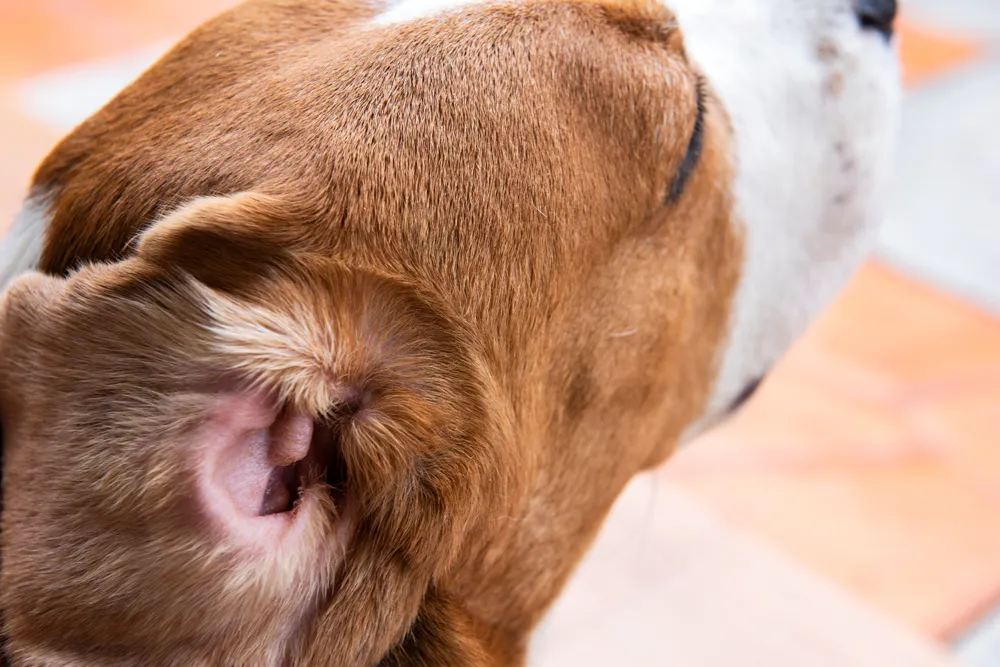
- Redness or swelling inside the ear flap
- Brown, yellow, or waxy discharge
- Tenderness, or pulling away when you touch the ear
An infection can affect one ear or both. If your dog seems in pain, off-balance, or suddenly withdrawn, those are worth paying attention to as well.
What Causes Ear Infections in Dogs?
An ear infection is usually a sign that something else has disrupted the healthy balance inside the ear canal. Once that barrier is disrupted, bacteria or yeast can overgrow and take hold. Common triggers include:
- Allergies, from food or the environment, which are the most frequent underlying cause. If your dog also develops eye redness, discharge or squinting, these may be signs of a separate dog eye infection.
- Trapped moisture after swimming or baths
- Ear mites, especially in younger dogs
- Foreign material such as grass seeds working into the ear
- Ear shape, since long, floppy ears hold in warmth and moisture
Because these root causes vary, effective treatment means addressing the cause and the infection together, not just one or the other.
How Vets Diagnose and Treat a Dog Ear Infection
Treating a dog ear infection starts with a veterinary visit to know exactly what you are dealing with. During the appointment, your veterinarian examines the ear canal and eardrum, then takes a small sample of the discharge to look at under a microscope. That reveals whether bacteria, yeast, or both are behind the infection, and it shapes the treatment plan.
Most infections are treated with a combination of cleaning and prescribed medication. Your vet will remove debris from the ear so that medication can reach where it needs to go, then start a course of treatment suited to your dog. You will be shown how to apply anything at home and, in some cases, asked to return for a follow-up to confirm the infection has fully cleared.
Finishing the entire course is important. Stopping early because the ear looks better can make the infection return, and repeat infections tend to be harder to resolve each time.
Home Remedies and Safe At-Home Care for Dog Ear Infections
Once your veterinarian has set up a plan, most of the day-to-day care happens at home, and it usually follows two steps:
- Clean first. Use the product your veterinarian recommends to gently clean the ear, let your dog shake its head to bring debris up, then wipe away what surfaces.
- Then medicate. Apply the prescribed medication to the cleaned ear.
Cleaning first is key, because applying medication over a canal full of debris keeps it from working.
Just as important is knowing what to keep away from your dog's ears. Don’t use any of the following home remedies often recommended for dog ear infections:
- Cotton swabs can push debris deeper and injure the canal
- Hydrogen peroxide and rubbing alcohol sting and irritate already-inflamed skin
- Vinegar, witch hazel, or oils can worsen an active infection
- Leftover medication from a past infection or another pet
Home remedies may seem gentle, but there are no reliable at-home cures for an ear infection, and some do more harm than good. The safest home care is following the plan your veterinarian gives you.
When to Book a Visit
Ear infections rarely get better on their own, so it is best to have your dog seen once you notice the signs. Booking promptly means a simpler, more comfortable recovery, since infections left alone can spread deeper into the ear and become more painful.
Reach out for a same-day or sick visit if you notice:
- Ongoing head shaking, scratching, or visible discomfort
- Odor, discharge, redness, or swelling
- An ear that seems painful to the touch
A dog that is severely distressed, losing its balance, or showing signs of a more serious problem needs a higher level of attention right away. If you are unsure where your dog falls, call your veterinary team.
At , same-day and weekend availability means your dog can be seen without a long wait.
Preventing Future Ear Infections
A little routine care keeps ears healthy and reduces repeat infections.
- Clean your dog's ears with a veterinarian-approved product, on a schedule that fits your dog
- Dry the ears thoroughly after swimming or baths
- Work with your vet to manage allergies, a common cause of recurring infections
- Check the ears regularly so you catch redness or odor early
Dogs prone to infections may benefit from a maintenance routine that your veterinary team can tailor to them.
Frequently Asked Questions
Can a dog ear infection go away on its own?
It is unlikely. Most ear infections need veterinary treatment to clear fully, and waiting can cause the infection to worsen. Having your dog seen early usually leads to a smoother recovery.
How long does it take to clear up?
Many straightforward infections improve within a couple of weeks of starting treatment, though this varies from dog to dog. Infections tied to allergies or other underlying issues can take longer and may need ongoing management.
Are dog ear infections contagious?
Most are not. The exception is ear mites, which spread easily between pets. So if mites are the cause, every animal in the home may need treatment at the same time.
Can I use home remedies?
There are no dependable at-home cures, and some popular remedies can irritate the ear or make things worse. Have your dog examined first, then stick to whatever your veterinarian prescribes.
Caring for Your Dog's Ears, Together
Most ear infections improve once a veterinarian examines the ear and starts the right treatment. If you have noticed the signs of a dog ear infection, the Hometown Veterinary Partners team is here to help your pet feel better quickly. and we’ll be happy to take a closer look.