
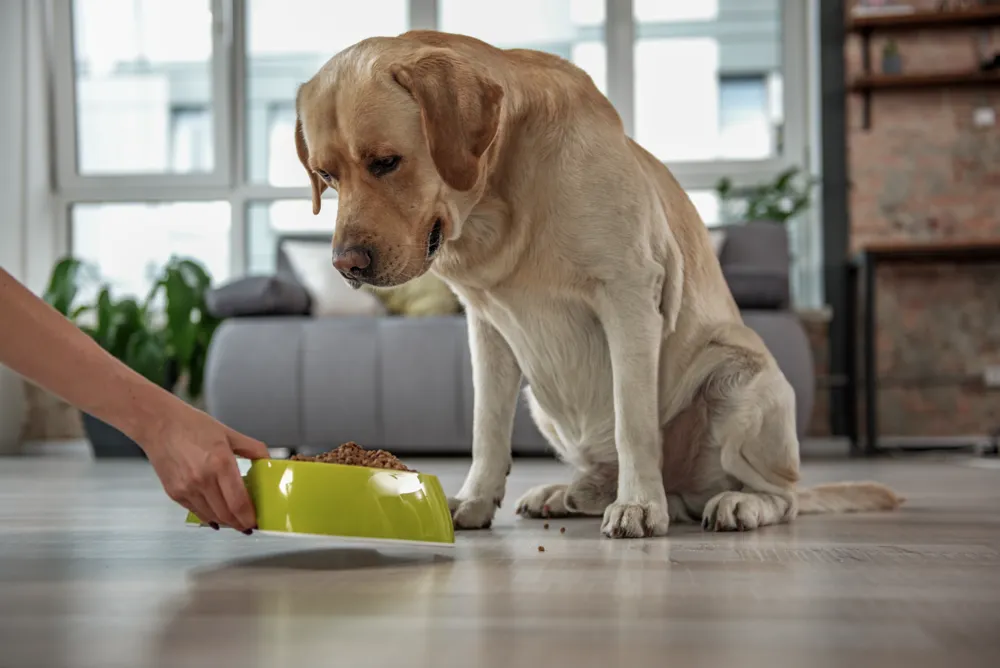
It is unsettling to see your dog vomit something yellow, especially if it happens suddenly. While it can look alarming, it is often bile, a digestive fluid that plays a normal role in your dog’s system.
The important part is not just what it looks like, but how often it happens and how your dog is acting overall.
What that yellow color actually means
That yellow or slightly green liquid is bile. It is produced by the liver and helps break down food during digestion.
Normally, bile stays in the intestines. But when it moves into the stomach, especially when the stomach is empty, it can cause irritation that leads to vomiting.
You will usually notice:
- A small amount of liquid
- Foamy or bubbly texture
- Yellow or green tint
- No strong odor
A common scenario you might recognize
Many dogs throw up yellow bile early in the morning or after long gaps between meals.
Picture this:
Your dog wakes up, has not eaten overnight, and suddenly vomits a small amount of yellow foam. Then they go right back to acting normal.
This pattern often points to an empty stomach rather than a serious illness.
Other reasons it can happen
While an empty stomach is a common cause, it is not the only one. Yellow vomiting can also be linked to underlying health issues.
Some possibilities include:
- Digestive upset or irritation
- Parasites
- Food sensitivities
- Pancreatitis
- Hormonal conditions
- Intestinal blockage
The difference comes down to frequency and other symptoms.
Quick self-check at home
If you are unsure how serious it is, take a step back and observe your dog as a whole.
Ask yourself:
- Are they eating normally?
- Do they still have energy?
- Has this happened more than once?
- Are there any new symptoms?
This quick check can help you decide whether to monitor or act.
What you can do right away
If your dog seems fine otherwise, you can make a few simple adjustments. Sometimes, just adjusting the feeding schedule can stop the issue completely.
Instead of one large gap between meals, try:
- Feeding smaller, more frequent meals
- Adding a late evening meal
- Keeping fresh water available
- Avoiding sudden diet changes
When it crosses the line
There is a point where this stops being something to watch and becomes something to address.
Pay attention if you notice:
- Vomiting more than once in a day
- Repeated episodes over several days
- Low energy or behavior changes
- Loss of appetite
- Signs of pain or discomfort
At that stage, it is no longer just about an empty stomach.
Why patterns matter more than one episode
One isolated incident is usually not a concern. A pattern is.
If your dog is throwing up yellow regularly, even if it is only once in the morning, it could point to ongoing irritation or an underlying condition.
That is when it is worth getting answers instead of continuing to guess.
What happens at the vet
Your vet will not just treat the vomiting. They will look for the cause behind it.
This often involves:
- Reviewing your dog’s feeding routine
- Asking about timing and frequency
- Checking for signs of illness
- Running tests if needed
From there, treatment may be as simple as diet changes or as specific as medication.
Get clarity and peace of mind
If your dog is throwing up yellow and you are not sure why, you do not have to figure it out alone.
Our team is here to listen, answer your questions, and help you understand what is going on. We offer same day appointments at every clinic, with select locations offering walk-ins, so your dog can get care when they need it.
Reach out today to get answers and keep your dog feeling their best.