Allergies in dogs do not always look the way you might expect. Instead of sneezing or watery eyes, most dogs show allergies through their skin and behavior.
If your dog seems uncomfortable, itchy, or just not like themselves, allergies are often the reason.
It usually starts with itching
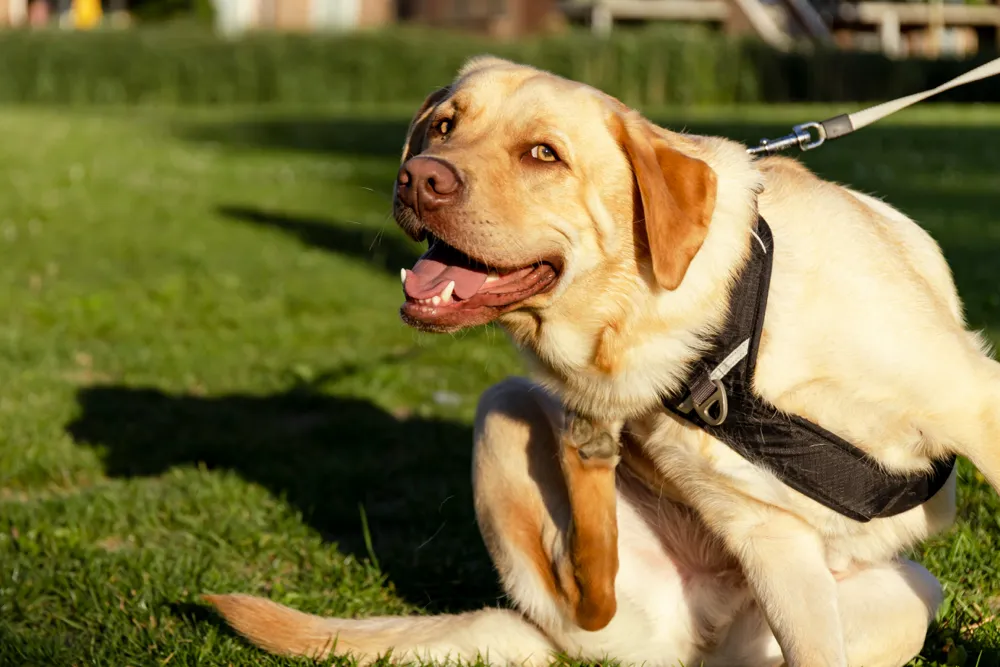
For most dogs, the first sign is simple but persistent itching. Not just an occasional scratch, but something that keeps coming back.
You might notice your dog:
- Scratching more than usual
- Licking or chewing their paws
- Rubbing their face on furniture or the floor
Over time, this can lead to redness, irritation, or even open sores.
“While chronic itchiness is an incredibly common indicator of canine environmental sensitivities, felines experience dermatological issues that present quite differently.
If you share your home with a cat showing signs of persistent grooming or skin irritation, look over our guidance on cat skin infection symptoms and care to identify the root cause.”
Where to look first
Allergies tend to show up in the same places over and over. If you know where to check, you can catch it earlier.
The most common problem areas are the paws, ears, belly, and face. Some dogs also develop irritation at the base of the tail, especially with flea allergies.
If your dog keeps focusing on one of these areas, it is usually not random.
What is actually causing it
There is usually a trigger behind the symptoms, even if it is not obvious right away.
In many cases, it comes down to one of three things:
- Something in the environment like pollen or dust
- Fleas, even if you do not see them
- Ingredients in your dog’s food
Some dogs react seasonally, while others deal with symptoms year-round.
A quick reality check
Here is a simple way to think about it:
- Occasional itching is normal.
- Constant or repeated itching is not.
If your dog’s symptoms keep coming back or never fully go away, allergies should be on your radar.
Signs it is getting worse
When allergies are not managed, they tend to escalate. What starts as mild itching can become more uncomfortable and may lead to dog skin infection symptoms such as redness, irritation, hot spots, or raw areas. Allergies are also among the most common causes of hot spots on dogs.
Watch for:
- Red or inflamed skin
- Hair loss or thinning coat
- Recurring ear infections
- Hot spots or raw areas, which may require veterinary hot spot treatment to control the irritation and support healing
- Changes in behavior like restlessness
At this point, it is more than just irritation.
What you can try at home
If symptoms are mild, there are a few ways to reduce irritation before taking the next step.
Start small:
- Wipe your dog’s paws after being outside
- Keep bedding clean and washed regularly
- Stay consistent with flea prevention
- Avoid switching foods suddenly
You can also pay attention to patterns. When symptoms show up can be just as important as what they look like.
Why patterns matter more than symptoms
Allergies are not always diagnosed from a single visit or symptom. They are often identified over time.
Think about:
- When symptoms started
- Whether they come and go
- What your dog was exposed to before they appeared
This kind of information helps narrow down the cause much faster.
When to get your vet involved
If your dog seems uncomfortable or symptoms are not improving, it is time to bring in your vet.
You do not need to wait for it to get severe.
Especially if:
- Itching is constant
- Skin is becoming damaged
- Ear infections keep coming back
- Home care is not helping
The earlier you address allergies, the easier they are to manage.
Getting your dog relief
Allergies may not always go away completely, but they can be managed effectively with the right approach.
Our team is here to help you figure out what is causing the issue and create a plan that keeps your dog comfortable long term. With same-day appointments available at all our clinics, and walk-ins offered at select locations, it’s easier to start treatment early and avoid unnecessary discomfort.
Reach out today to get answers and help your dog feel better.